

batv
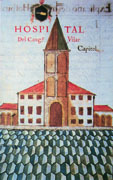
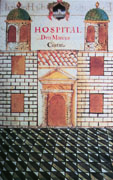
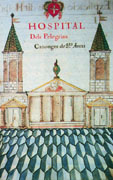
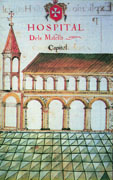
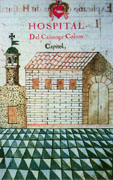
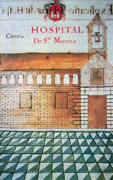
The origins of the Hospital de la Santa Creu i Sant Pau date back to 1401, with the unification of the six hospitals in Barcelona at the time to form one large institution governed by representatives of the city and the Church through a body known as the Very Illustrious Administration, which still exists today. This is how the Hospital de la Santa Creu originated, as a clear example of the civil Catalan Gothic period.
 |  |  |
 |  |  |
At the end of the 19th century, the country underwent an economic and social transformation, while healthcare shifted towards scientific medicine and embraced hygiene principals. Due to the growth of the city and advances in medicine, the Hospital outgrew its premises and construction of a new building was proposed.
Thanks to the legacy of the banker Pau Gil, on 15th January 1902, the first stone of the new hospital was laid. The name Sant Pau was added to the former one of Santa Creu to honor the benefactor’s wishes. As a result, in 1930, the Hospital de la Santa Creu i Sant Pau was inaugurated. The architect Lluís Domènech i Montaner (1850-1923) was commissioned to oversee the project, which went on to became the most important civil building of the Catalan Art Nouveau movement.
The architectural complex of the Hospital de la Santa Creu i Sant Pau is an extremely important treasure of the heritage and culture of the city of Barcelona, and, more broadly, of Catalonia. Its architectural and heritage value transcends its urban setting, resonating at European and international levels. One demonstration of this is the fact that, in 1997, together with the Palau de la Música Catalana, the Hospital was declared a World Heritage site by UNESCO for its unique construction and artistic beauty.
Some of the key events in the history of the Hospital and the city are recorded in the Historic Archive of the Hospital de la Santa Creu i Sant Pau.
Sant Pau today
In 1990, the Generalitat (Catalan Government) joined the Hospital’s Board of Administration. Since then, the Board has been made up of two representatives from the Cathedral Chapter, two from the City Council, and two from the Generalitat, all committed to building a new hospital.
The roles of the healthcare and asset management were definitively separated, each becoming a non-profit foundation: the Fundació Privada Hospital de la Santa Creu i Sant Pau, governed by the Board of Administration and managing the Hospital’s assets to contribute towards the upkeep of its healthcare services; and the Fundació de Gestió Sanitària Hospital de la Santa Creu i Sant Pau, which oversees the management of the Hospital itself. In 1992, a third Foundation was created, the Fundació Institut de Recerca Hospital de la Santa Creu i Sant Pau, with the specific mission of promoting basic, clinical, epidemiological and healthcare research.
In 2009, the Hospital de la Santa Creu i Sant Pau inaugurated its new premises, a healthcare complex in a separate building to the far north-east of the Art Nouveau wings. Relocating the hospital’s activity enabled the start of renovations of the Art Nouveau buildings, repurposing them for a new project. The new Hospital consists of five almost independent wings meeting at a central lobby that facilitates movement and communication across the hospital complex.
The Board of Governors, known as the Very Illustrious Administration, is the Hospital’s highest governance body and it is jointly comprised of representatives from the Barcelona City Council, the Cathedral Chapter, and the Catalan Government. Today, the Hospital is part of the public healthcare system of Catalonia (SISCAT).
Meanwhile, the Fundació Privada Hospital de la Santa Creu i Sant Pau (Private Foundation of the Hospital) oversees and ensures the maintenance and conservation of the historical Art Nouveau complex and conducts the institution’s charitable healthcare activities.


