

Presbycusis is the hearing loss that usually appears between the ages of 50 and 60, although it often goes unnoticed in the early stages. At Hospital de Sant Pau, we accompany you on this journey of adaptation, because hearing well means living better.
Presbycusis:
When the ear gets tired



What is presbycusis?

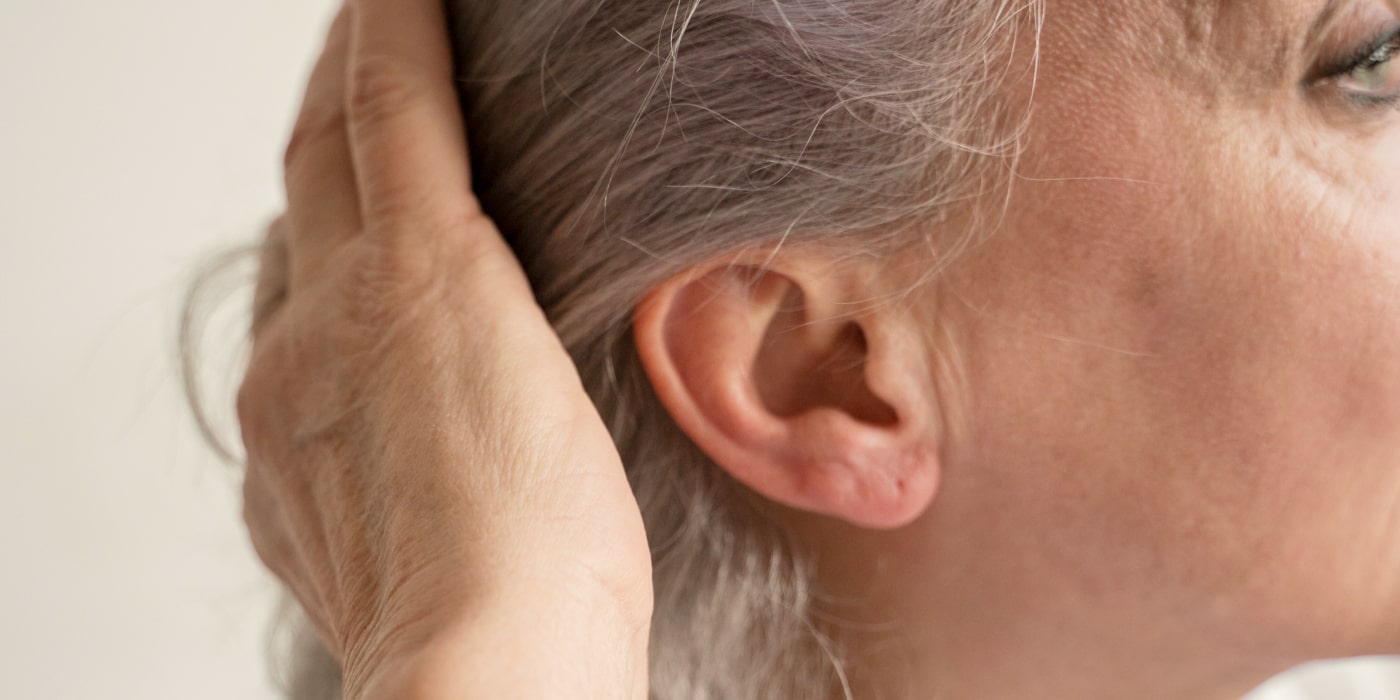

Presbycusis is the hearing loss that develops with age, and it's a very common phenomenon. Over the years, many people begin to hear a little less.
This hearing loss usually starts between the ages of 50 and 60, although it can appear earlier or later. Factors such as genetics, lifestyle habits, or having been exposed to a lot of noise can influence it.
Presbycusis usually affects both ears equally and makes it harder to hear high-pitched sounds. It can also make it harder to understand what others are saying, especially if there’s background noise.
+50
years
The first symptoms can begin between the ages of 50 and 60.
33%
people +65
33% of people over 65 have presbycusis.
80%
people +80
80% of people over 80 have presbycusis.
How does presbycusis affect your day to day?
The symptoms of presbycusis usually appear little by little, and often the person who has it doesn’t realise it until the hearing loss starts to be noticeable in everyday life. These are the most common symptoms:
- You have trouble following conversations
- You hear that someone is talking, but you don’t understand what they’re saying.
- Sometimes it seems like other people are mumbling.
- This happens especially when there’s background noise or several people talking at the same time.
- You need to turn the volume up on the TV, radio, or phone
- People often tell you: “The TV is too loud!”
- You have difficulty hearing words with high-pitched sounds
- For example: children's voices, doorbells, or sounds like “s,” “f,” “sh.”
- It’s easier for you to hear low-pitched voices.
- You feel tired after listening for a long time
- You have to make a big effort to understand what people are saying, and this can cause fatigue or headaches.
“Presbycusis is a natural process. As we age, it’s normal for the ear to lose sensitivity, just like vision or other body functions.”
Why do we lose hearing over time?
Hearing loss happens because the cells of the inner ear wear out over time, especially the ones that pick up the highest-pitched sounds. This deterioration mainly affects high frequencies, which are essential for understanding speech well.
What can make presbycusis appear earlier, get worse or progress faster?

Loud noises
Hearing very loud sounds often (like machines, concerts, or loud music with headphones) can harm your ears and make hearing loss worse.

Certain illnesses
Diseases like diabetes, high blood pressure or circulation problems can affect the ear and cause you to lose hearing more quickly.

Medication
There is a small group of medications that, in some cases, can damage the ear as a side effect. They are called ototoxic. If you have any doubts, consult your specialist.

Genetics
Some people are at greater risk of hearing loss due to genetic reasons.
“Presbycusis can make it harder to talk to other people. Explain it to your family and environment so you can communicate better.”
Tips for patients, family members, and caretakers
To help a person with presbycusis, it’s important that their family understand and accept their situation. Show empathy, avoid jokes that make them feel bad, and do everything you can to include them in conversations and in family and social activities. Support and understanding from those around them can make a big difference in their wellbeing and self-esteem.
Tips for patients:
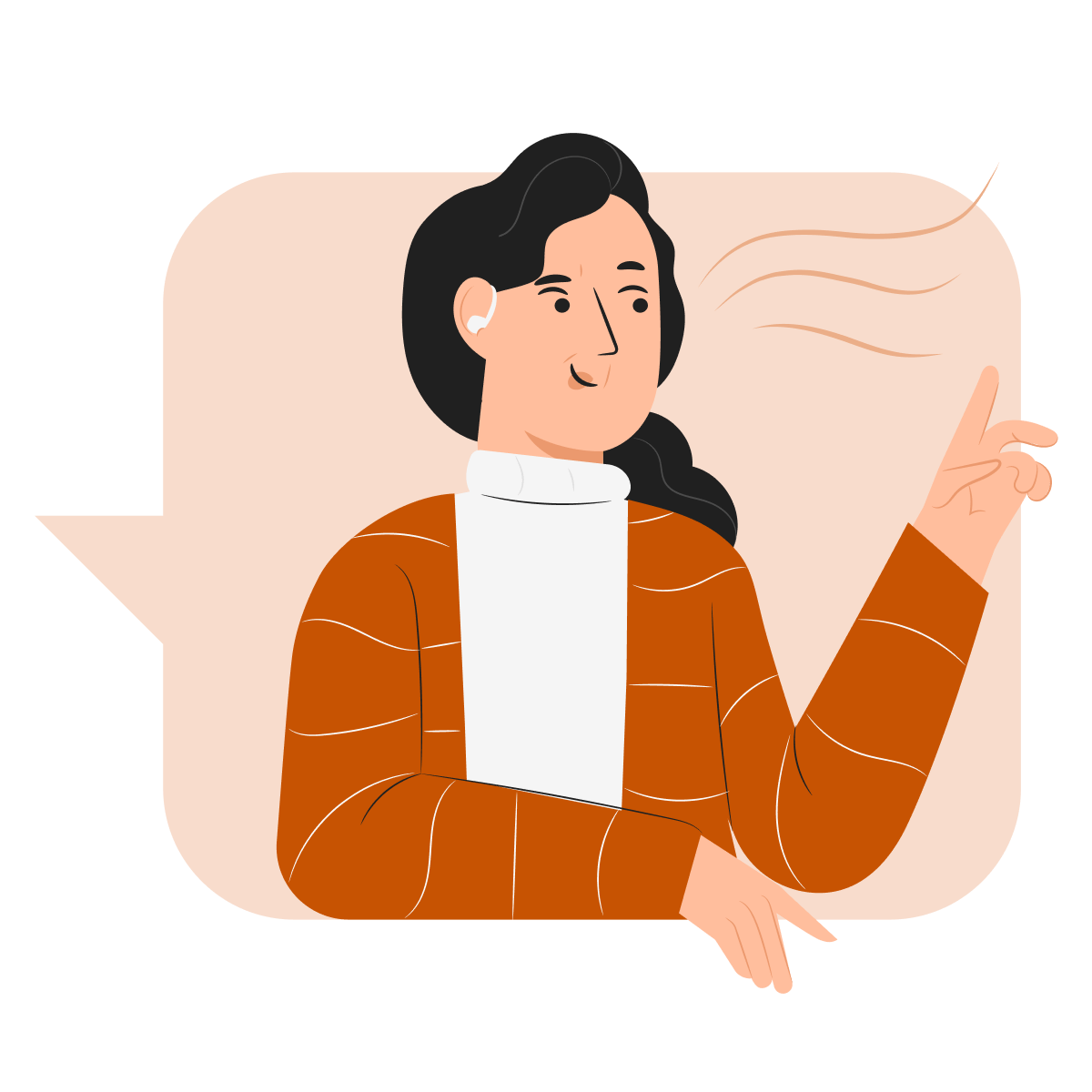

- Tell people you have trouble hearing
If your family and friends know, they’ll be able to speak to you clearer. - Choose quiet places to talk
If you’re somewhere noisy, look for a quieter spot. - If you don’t understand something, ask them to repeat it
You can also ask them to say it in a different way. - Improve communication to feel better
It will improve your relationships and your wellbeing.
Tips for family members and caretakers
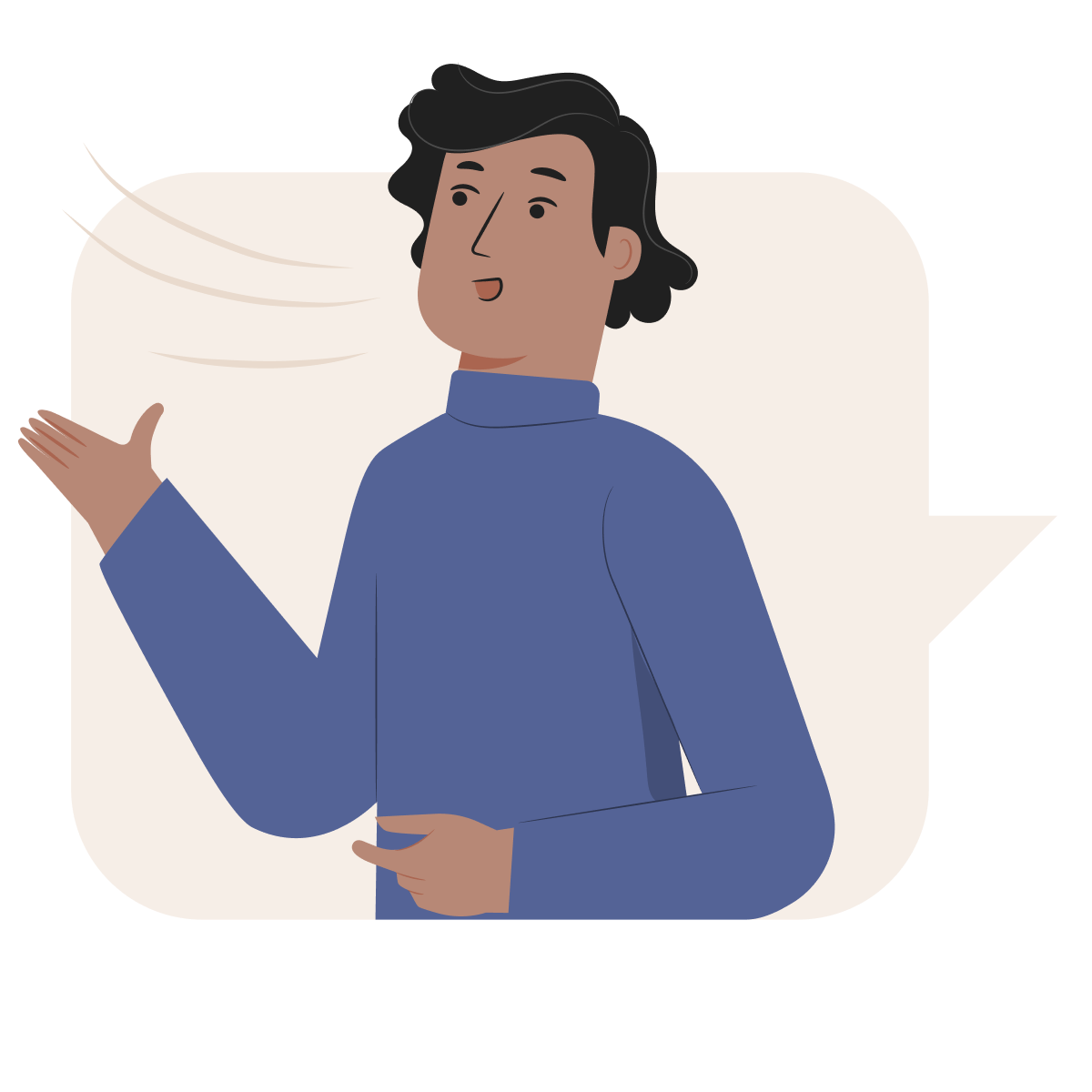
- Speak facing the person with presbycusis
That way they can read your lips and facial expressions and understand you better. - Make sure they’re listening to you
Try to get their attention before you speak, for example by saying their name or looking them in the eye. - Speak clearly and a little louder
You don’t need to shout. Speak slowly and enunciate clearly. - Reduce background noise
Turn off the TV or radio, and don’t talk to them from another room. - Use simple sentences
If they don’t understand a sentence, explain it another way. - Be patient
With presbycusis, talking can take longer. Be understanding.
Tips for hearing the TV better
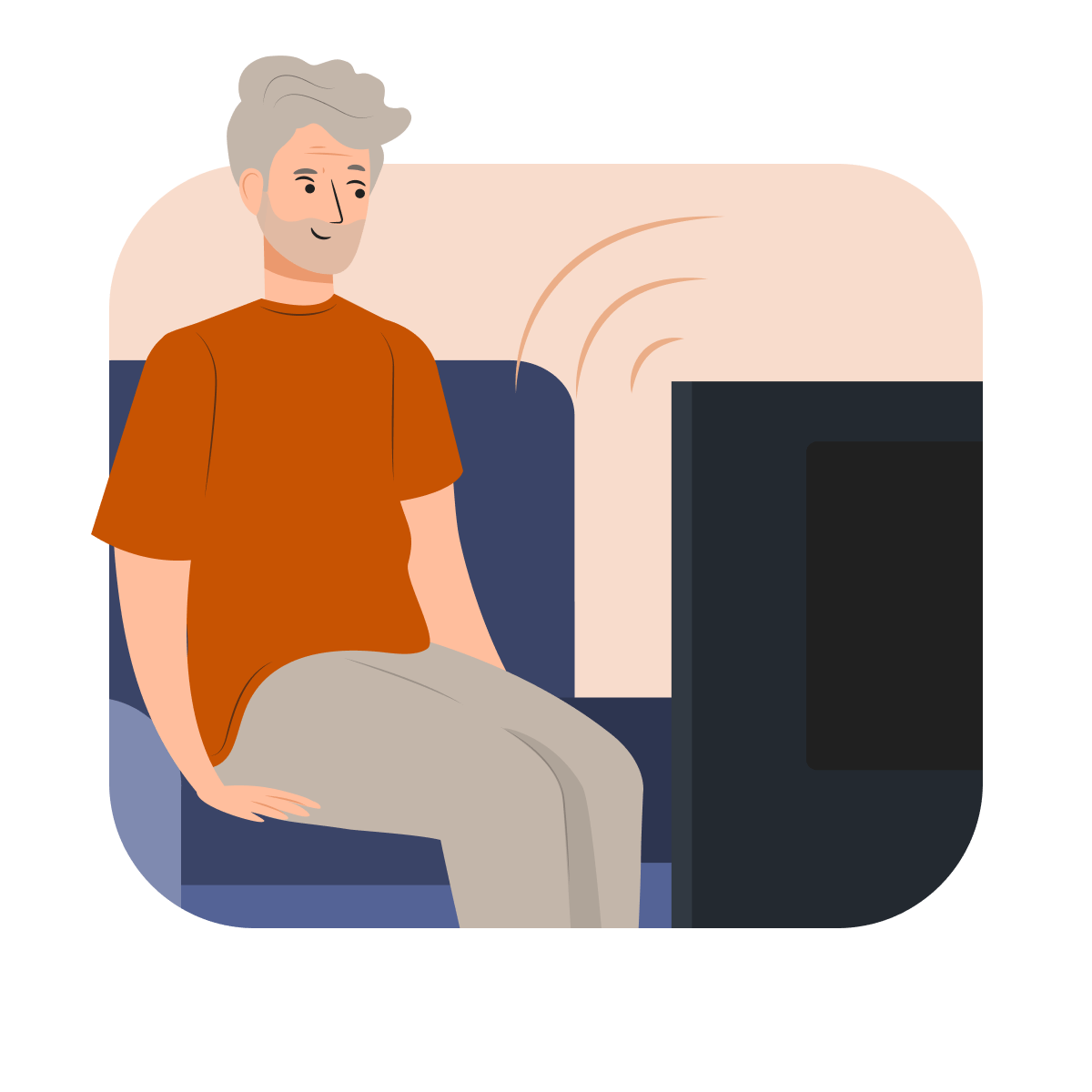
- Use wireless headphones
Some are made for watching TV and will help you hear better. - Adjust the sound of the TV
Many TVs let you adjust treble and bass. If you increase the treble, you’ll hear voices better. - Turn on subtitles
Even if you don’t always use them, they really help when there’s background noise. - Avoid noise while watching TV
Turn off other devices or close windows if there’s noise outside. - Place the TV properly
The TV should be at the correct distance and height.
I can’t hear well. What should I do?
If you’re having trouble hearing well, we’ll guide you step by step. Here we explain the process for detecting and understanding presbycusis.
- Visit your general practitioner
If you’re having trouble hearing well, the first step is to go to your general practitioner. They will do an initial assessment of your hearing. - Do an audiometry test with the audiologist
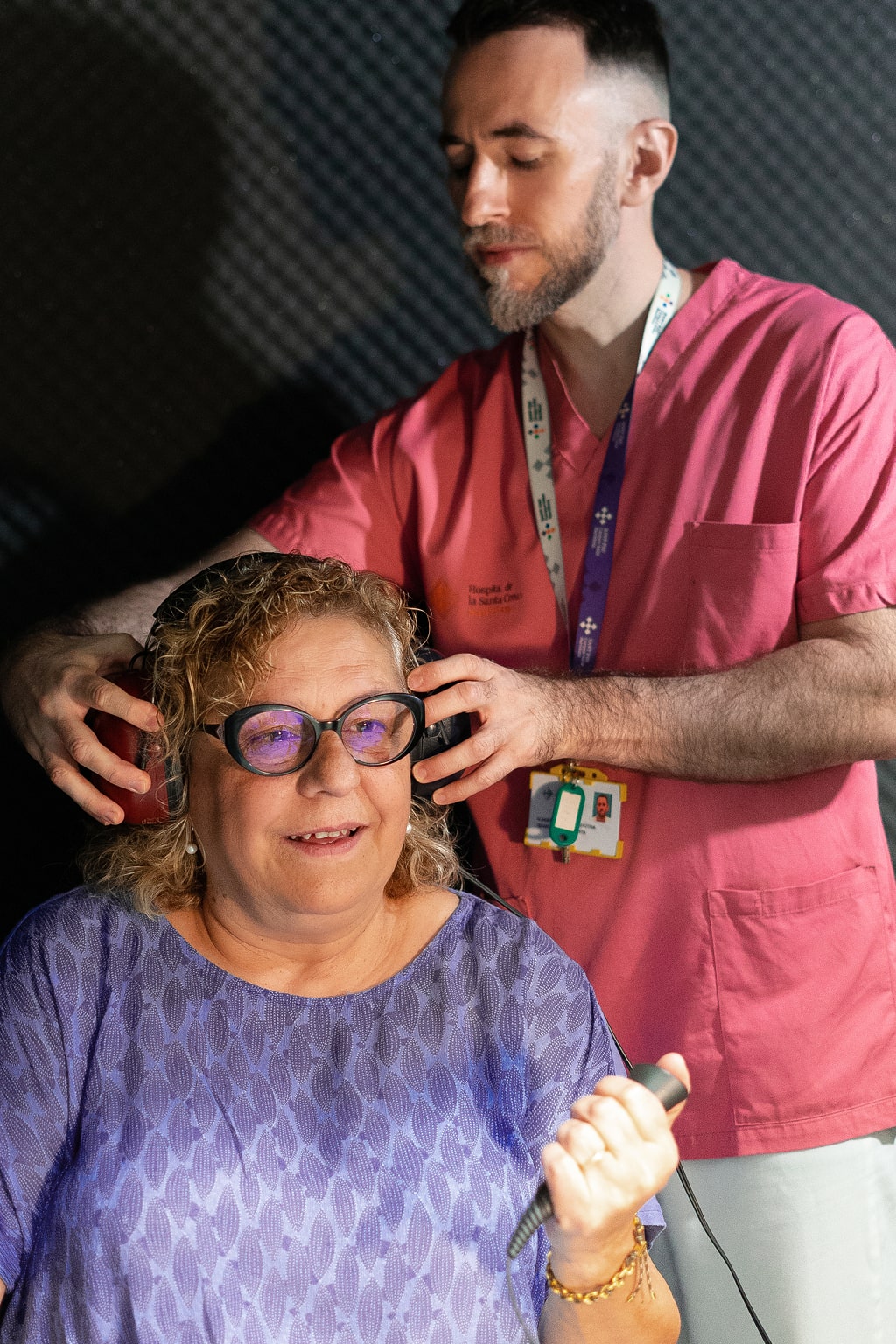
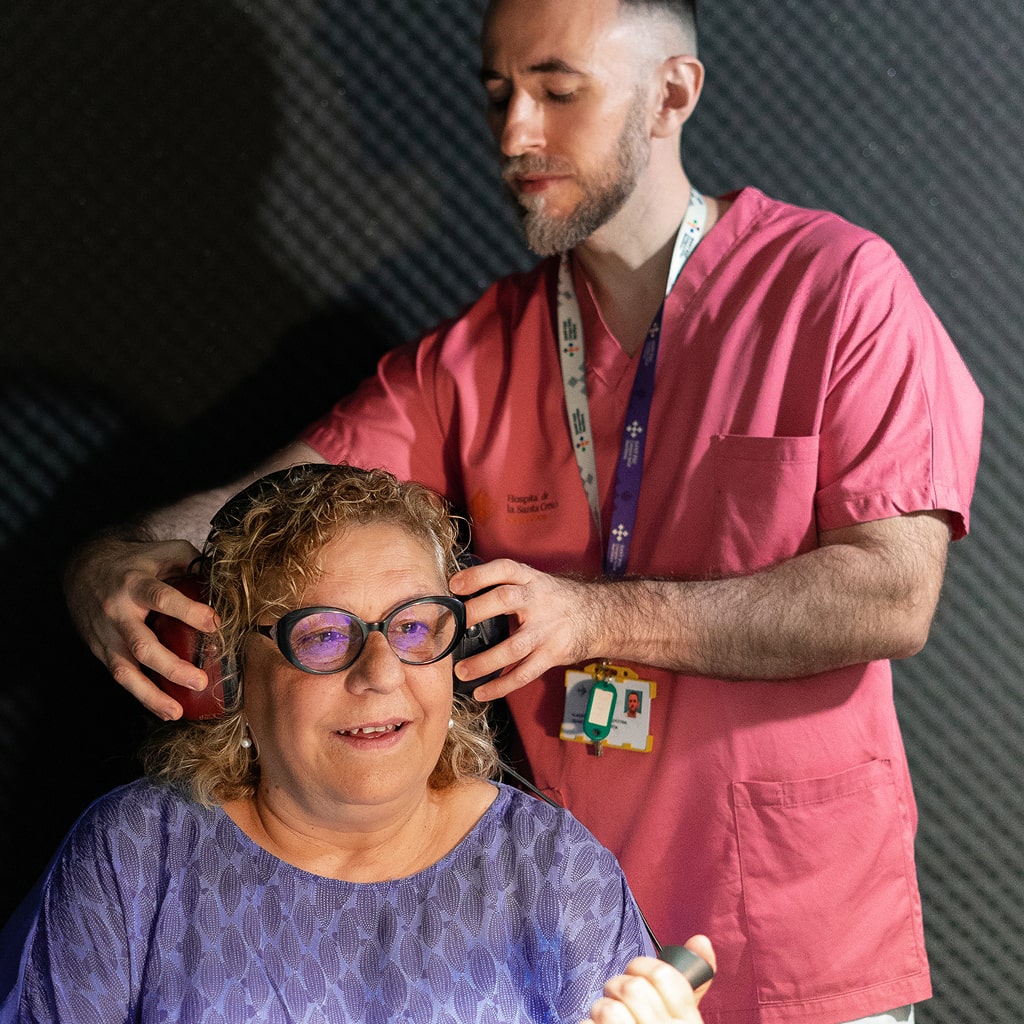
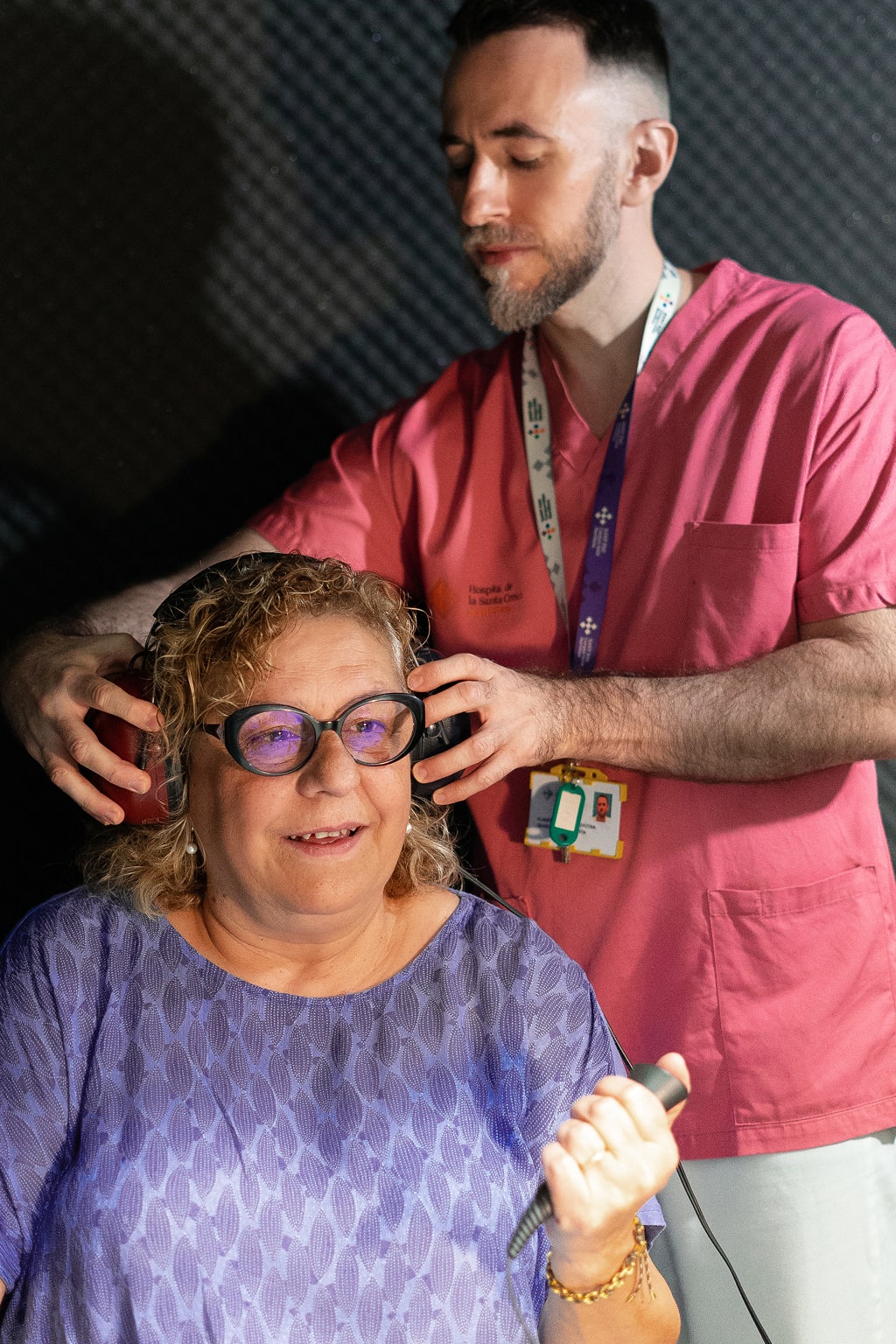
If necessary, the doctor will ask you to take a hearing test with the audiologist. This test is called an audiometry and it helps determine how you hear. - Visit the ENT specialist
With the test results, you should go to the ENT (ear, nose and throat) specialist. They will explain whether or not you have presbycusis and give you the appropriate information and advice. - Diagnosis: Presbycusis
Presbycusis is not a serious illness. It’s a common condition that comes with age. You don’t need medical treatment, but you can improve a lot with our advice and, if needed, the use of hearing aids. - After the diagnosis
If you’ve been discharged, pay attention to the following signs to know if you need to return to the specialist. If there are no warning signs, follow-up is not necessary.
When is it necessary to return to the specialist?



- Sudden worsening of hearing
Presbycusis is usually slow and progressive, so a sudden loss may indicate another issue (e.g., sudden sensorineural hearing loss, infections, etc.). - New or louder noises
If new noises appear in your ears (buzzing, ringing) or they get worse, this may indicate changes in your hearing or stress. - Changes in behaviour or mood
If the person shows apathy, irritability, social withdrawal, or signs of depression, it may be related to the emotional impact of hearing loss. - Difficulty understanding speech, even with hearing aids
If understanding worsens despite using hearing aids, it may indicate cognitive decline or the need to readjust the equipment. - Ear pain or pressure
This is not typical of presbycusis. It may indicate infections, earwax blockage, or other conditions..
“Using hearing aids in case of presbycusis improves communication, enables social life, and protects cognitive health. Hearing well means living better and more independently.”
Guide for using hearing aids for presbycusis
What are hearing aids?
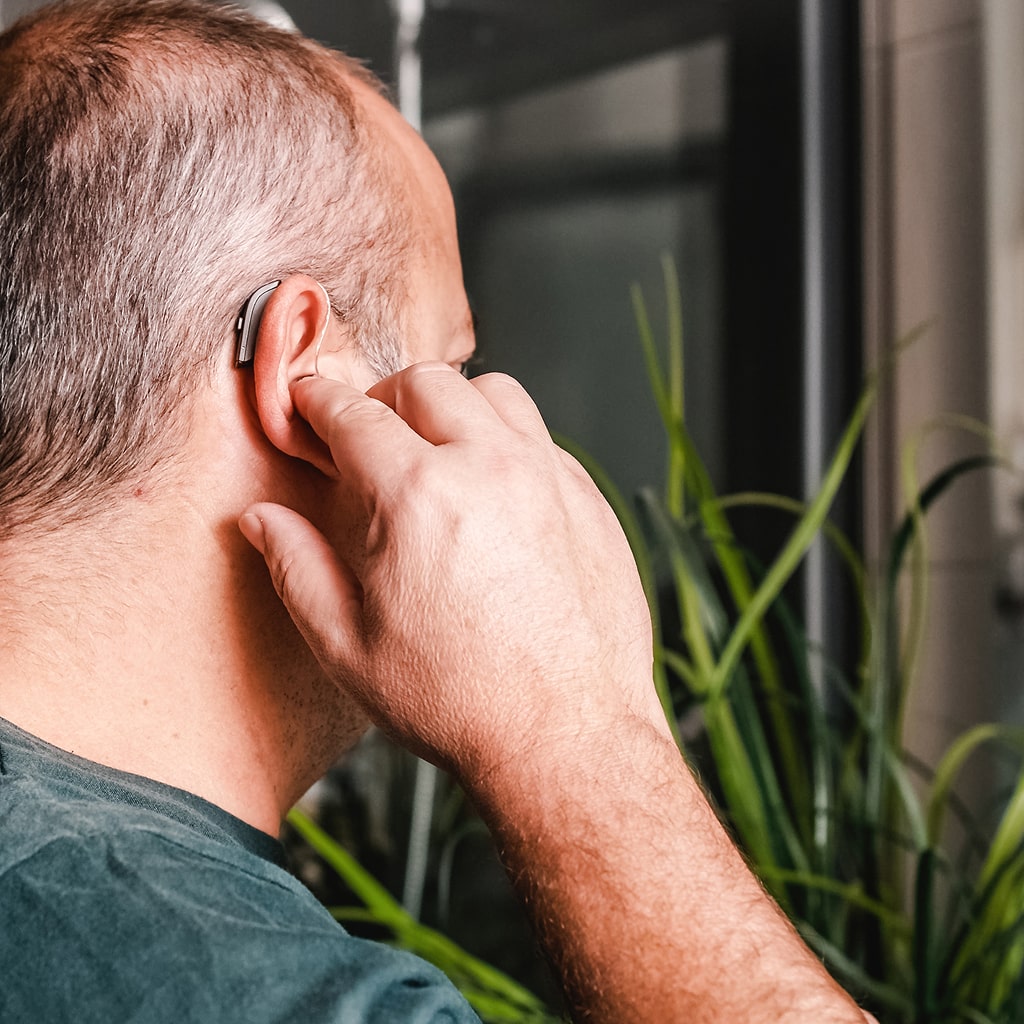
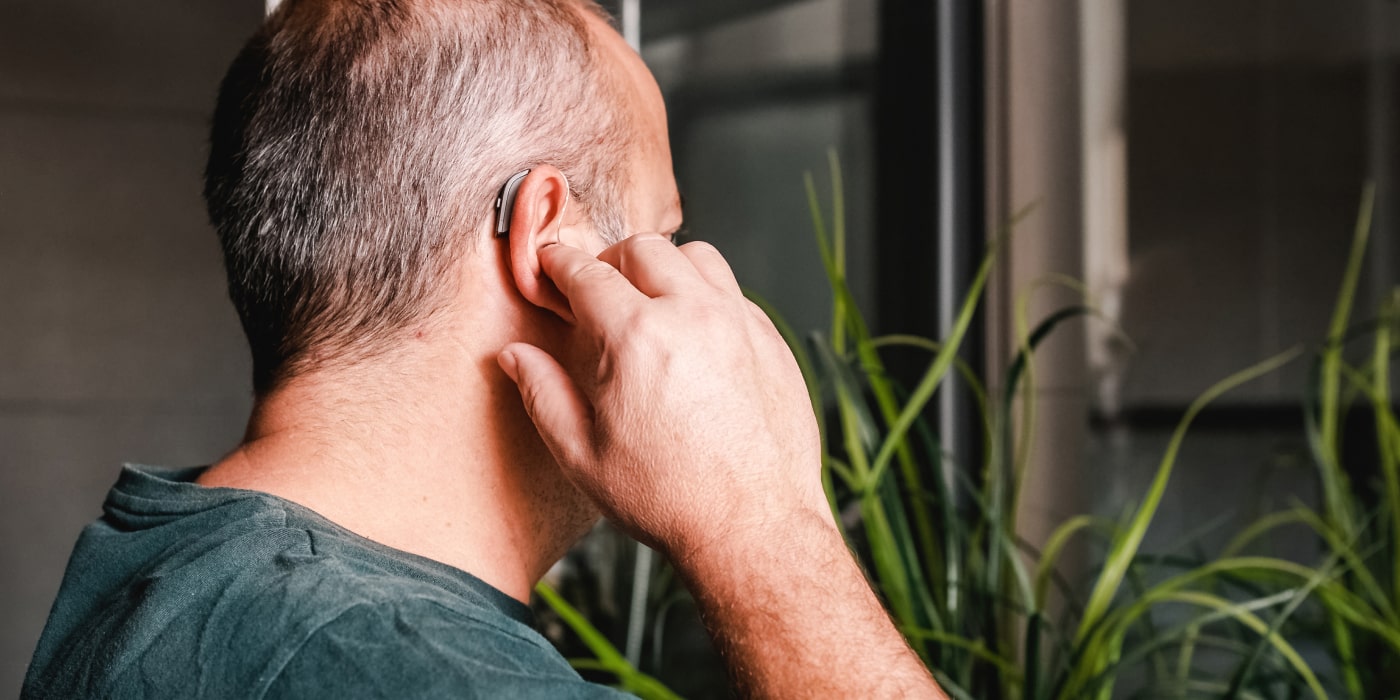

Hearing aids are electronic devices that help you hear better. They make sounds louder and clearer for people with hearing difficulties. They have three main parts: microphone, amplifier and speaker (or receiver). The microphone picks up sounds, the amplifier filters, processes, and adjusts them to the user’s specific needs, and the receiver sends them to the ear.
Hearing aids can be very helpful for understanding conversations and everyday sounds. For example, they can help in situations like:
- When you have to turn up the TV or radio volume a lot.
- When it’s hard to understand what people are saying, especially with background noise.
- When it's difficult to hear phone or long-distance conversations.
When should I consider using hearing aids?
Hearing aids are recommended when hearing loss starts affecting communication and quality of life. Although there’s no single threshold, their use is often recommended from when there is mild or moderate hearing loss (around 41 to 55 decibels), especially if the person has trouble understanding speech in noisy environments.
Benefits of using hearing aids

They help you better understand what others are saying
Hearing aids amplify sounds. This can help you follow conversations more easily.

They improve your relationship with others
With hearing aids, it’s easier to talk and have a social life. This can help you feel less alone or isolated.

They help reduce listening fatigue
When you don’t hear well, you have to make more effort to understand what people are saying. Hearing aids help reduce that effort.

They keep your brain active
They can help maintain memory and keep your mind active, and may help prevent cognitive decline over time.

They adapt to you
Hearing aids are adjusted to your needs, depending on your level of hearing loss and your environment.

They are practical and modern
Hearing aids are getting smaller and more ergonomic. Plus, they can be connected to your mobile phone and television.
Tips for using hearing aids
- Follow your own pace
- Start wearing hearing aids in quiet places, like at home.
- Little by little, start using them in noisier places (outside, in a café…).
- At first, you may hear strange sounds. Give your brain time to adjust.
- Hearing aids don’t solve the problem, but they help you live better.
- Inform your family
- Tell your family or friends that you’re starting to use hearing aids.
- Take care of your hearing aids
- Clean them daily with a soft cloth. Don’t use water or harsh products.
- Store them in a dry place, preferably in their case.
- Check if they have enough battery. If the sound is low or strange, it may be time to change batteries or charge them.
- Have check-ups with your audiologist in case adjustments are needed.
Frequently Asked Questions about Hearing Aid Use
Can I use hearing aids with my mobile phone or when watching TV?
Yes, you can use them without any problems. In fact, most of them can connect to your mobile phone or TV via Bluetooth. This allows you to hear calls, music, or the TV directly through your hearing aids, with better quality and comfort.
Should hearing aids get wet? What if I sweat or get caught in the rain?
No, hearing aids should not get wet, but most are resistant to sweat and light splashes of rain. If you get very wet or take a shower, it’s best to take them off. If they get damp, dry them thoroughly.
How long do they last? Do they break easily? Do they come with a warranty?
- Hearing aids usually last between 5 and 7 years if well cared for.
- They don’t break easily, but it’s important to clean them regularly and protect them from moisture and impact.
- All hearing aids come with a warranty, usually between 2 and 5 years, depending on the manufacturer. Ask your hearing centre what your warranty covers.
What can I do if my hearing aids whistle (make a squealing sound)?
If your hearing aids whistle, it could be due to different reasons:
- Incorrect placement in the ear.
- Earwax in the ear canal.
- Volume too high.
- Dirty or broken tube or tip.
Try repositioning and cleaning them. If the whistling continues, take them to your hearing centre for a check-up.
Will hearing aids help if I have tinnitus (ringing in the ears)?
Yes, in some cases, hearing aids can reduce the perception of tinnitus. Some models include relaxing sounds that reduce the discomfort tinnitus can cause.
Can I wear only one hearing aid if I have hearing loss in both ears?
It’s not recommended. The brain processes information better when it receives it from both sides. This improves speech understanding, helps locate where sounds come from, and prevents one ear from losing more capacity than the other.


