

At Sant Pau we accompany you in the recovery from a fragility hip fracture, not only ensuring a good recovery but also providing health education for patients and caregivers.
Resources for Fragility Hip Fractures


Osteoporosis and Fragility Fractures
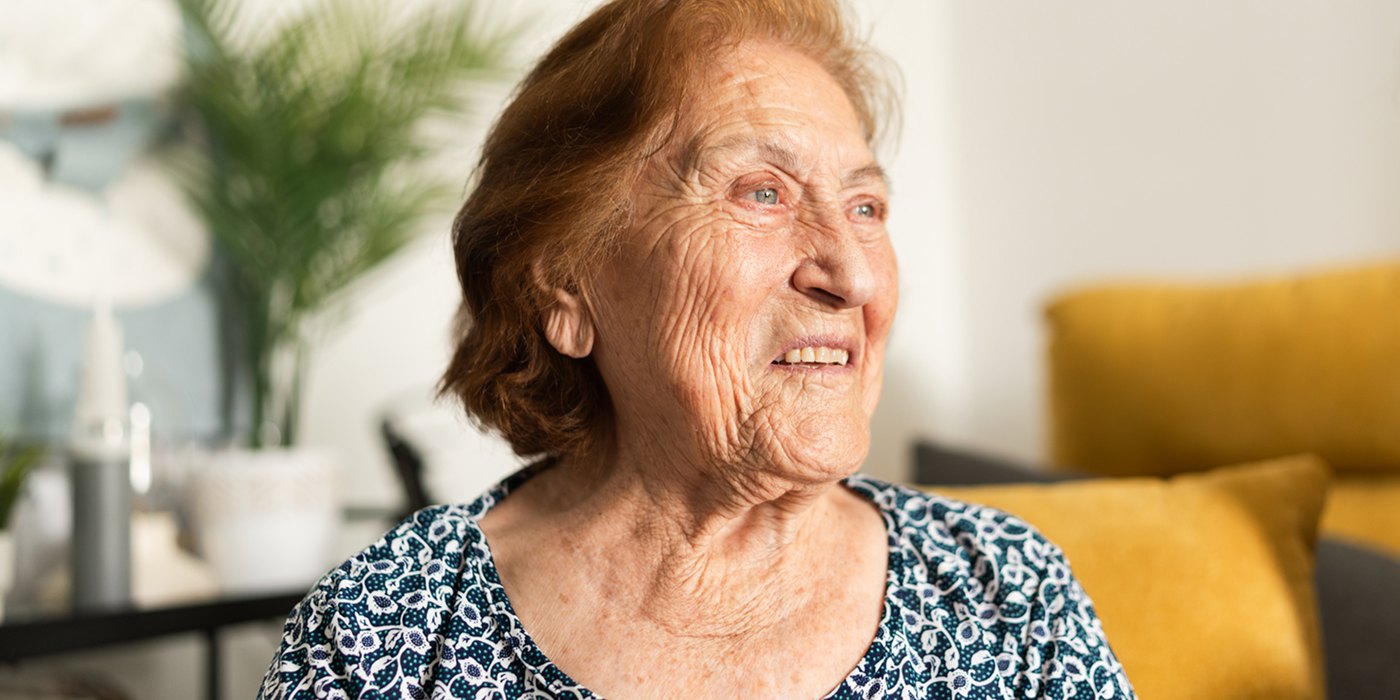
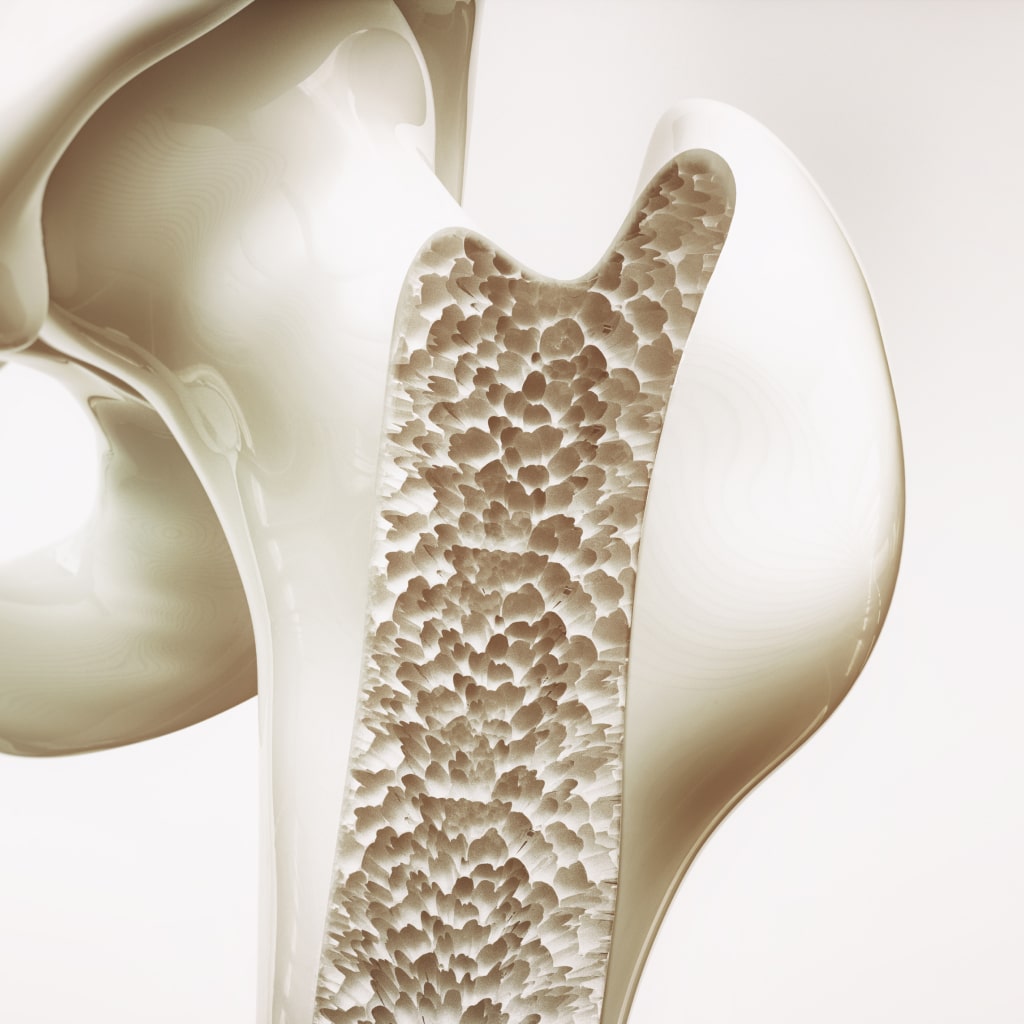
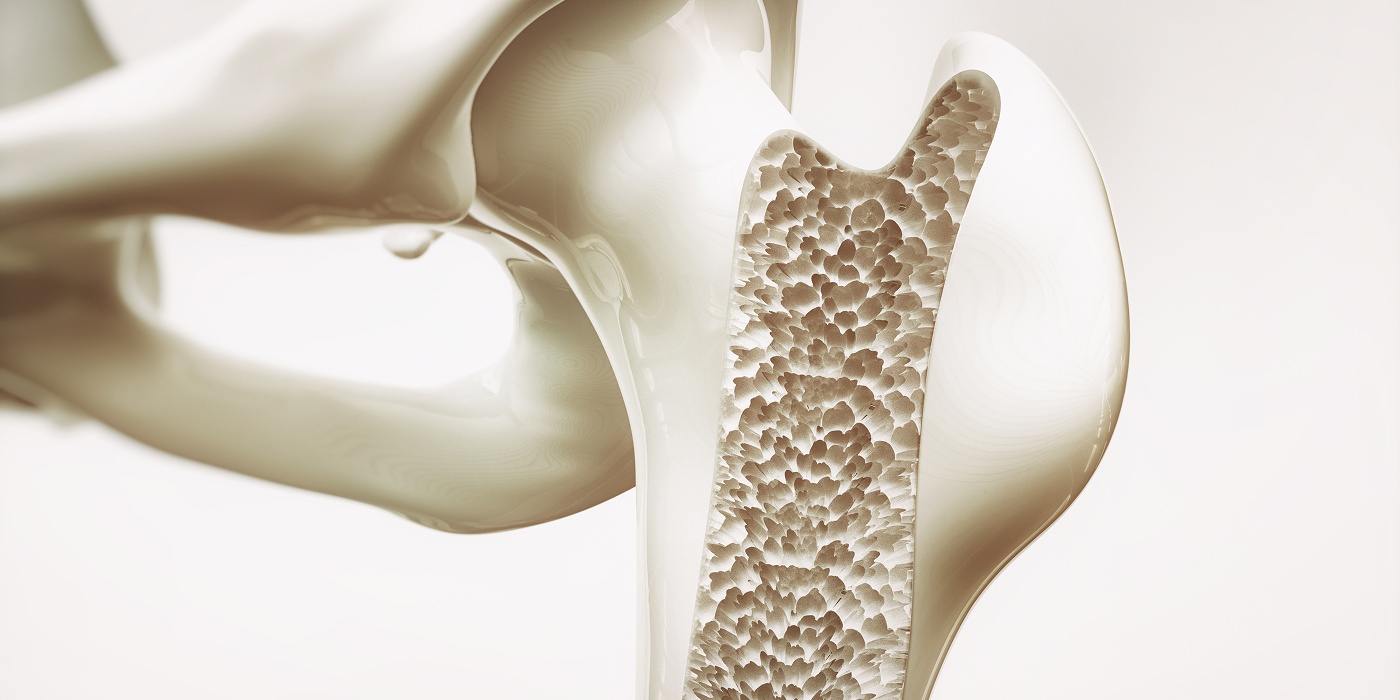
Osteoporosis is a disease that weakens the bones and increases the risk of fractures, especially in older women. These fractures, called fragility fractures, can appear after mild falls that in other people would not cause problems.
When a fragility fracture has already occurred, the risk of fracturing again is very high. That is why it is important to follow an appropriate treatment for osteoporosis and carry out medical check-ups.
Hip fractures are especially serious, since they usually require surgery and hospitalisation. Recovery is often slow and requires rehabilitation, with a considerable impact on quality of life.

80%
women
Women are the most affected patients.

88
years old
Average age of the patients at Sant Pau.

15%
are refractures
The risk of suffering the same fracture again is high.
Types of Fragility Hip Fractures
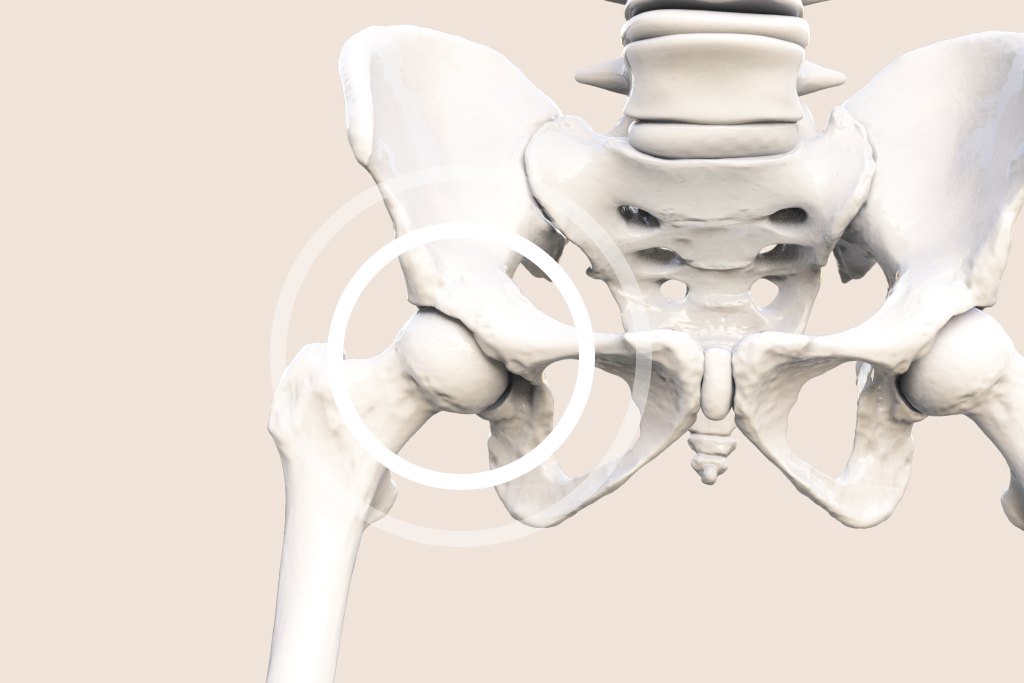
A hip fracture occurs when the femur breaks, near the hip. They affect particularly older people with weak bones and can cause a lot of pain and difficulty walking. Normally surgery is needed, as well as rehabilitation to recover strength and mobility.
The femur is the thigh bone and is the longest and strongest bone in the human body. Its upper part has a round ball (head of the femur) that fits into the pelvis (acetabulum) and forms the hip joint. This joint allows you to move your leg and support the weight of your body.
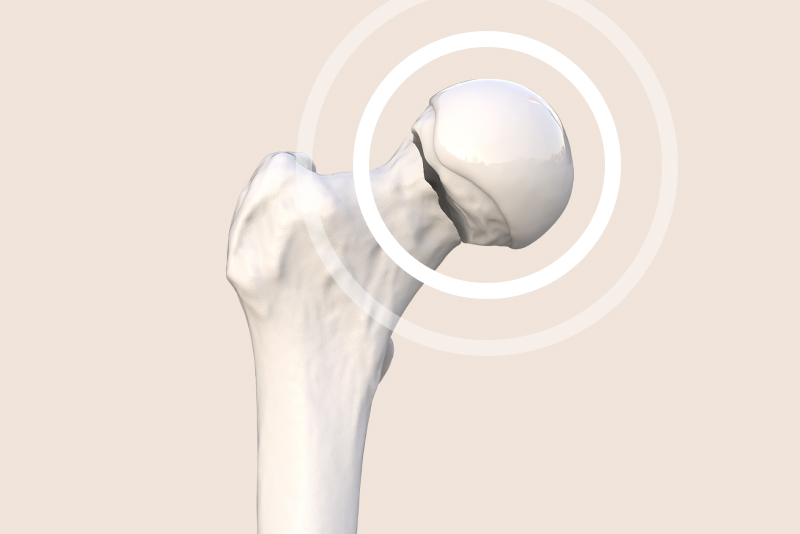
Fracture in the head and neck of the femur
If the fracture is not displaced, the bone is fixed with screws in the head of the femur.
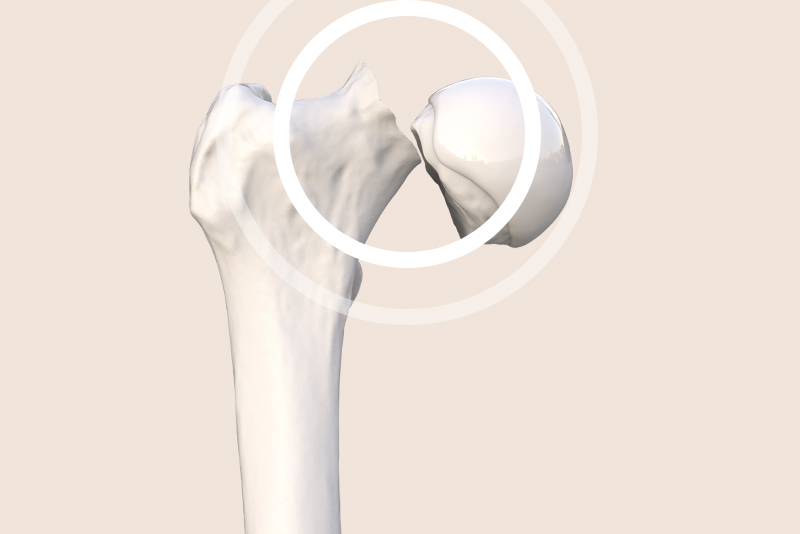
Fracture in the head and neck of the femur with displacement
When the fracture is displaced, a prosthesis is almost always required.
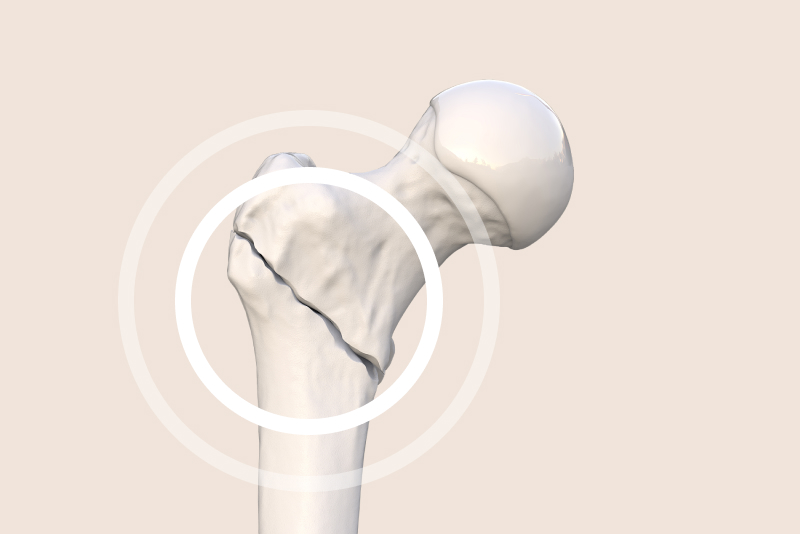
Fracture in the trochanteric region of the femur
Fractures in the trochanteric region are usually treated with nails or with plates and screws.
I have had a hip replacement. Which movements should I avoid?
If you have had a hip replacement, it is important to take care to prevent the prosthesis from coming out of place. The risk is higher during the first few months, so you should follow these measures to avoid dislocation:
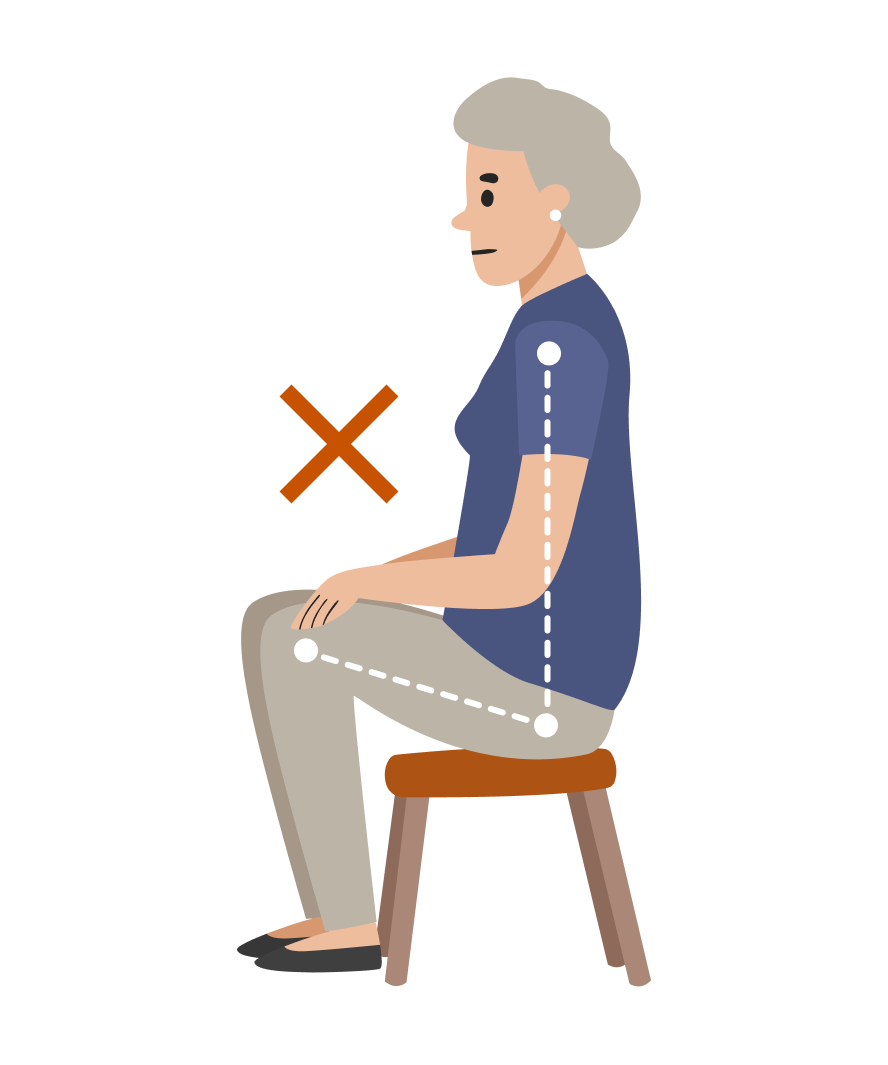
1
Do not sit in low chairs or lean forward when sitting.
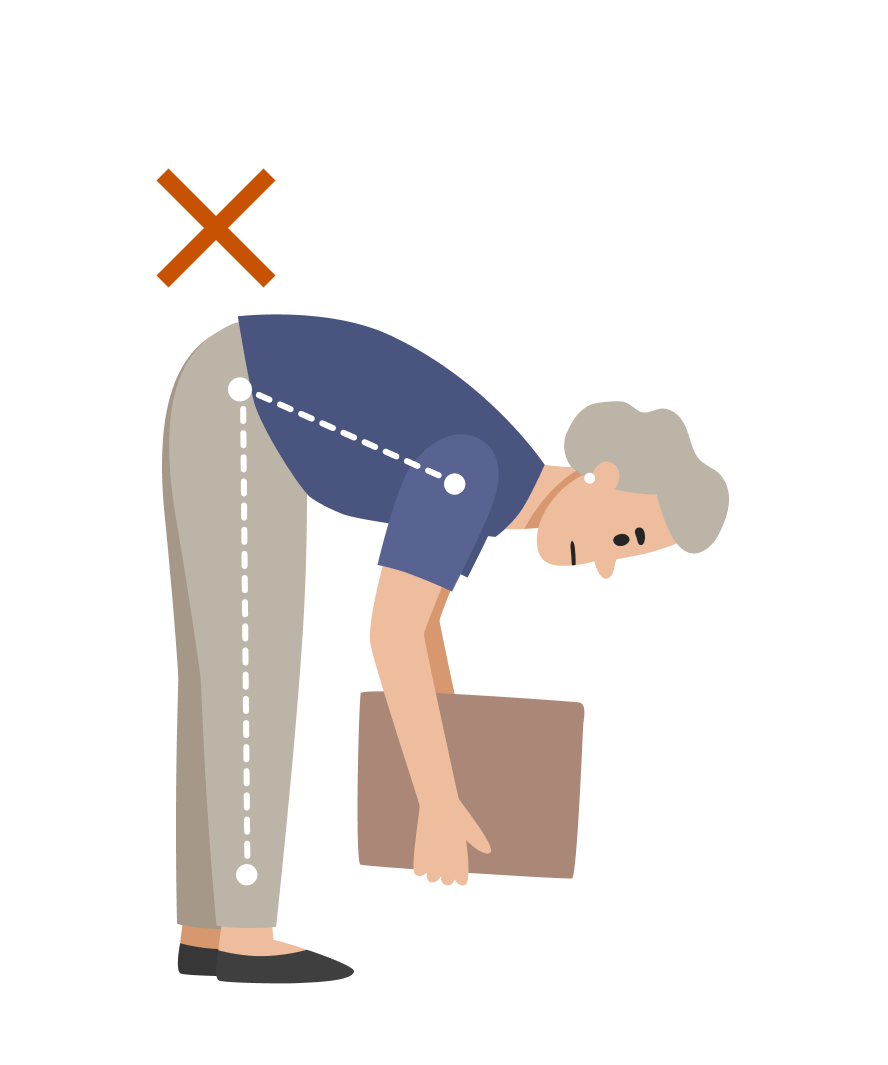
2
Do not bend down. If you need to pick something up from the floor, you can use long tongs.
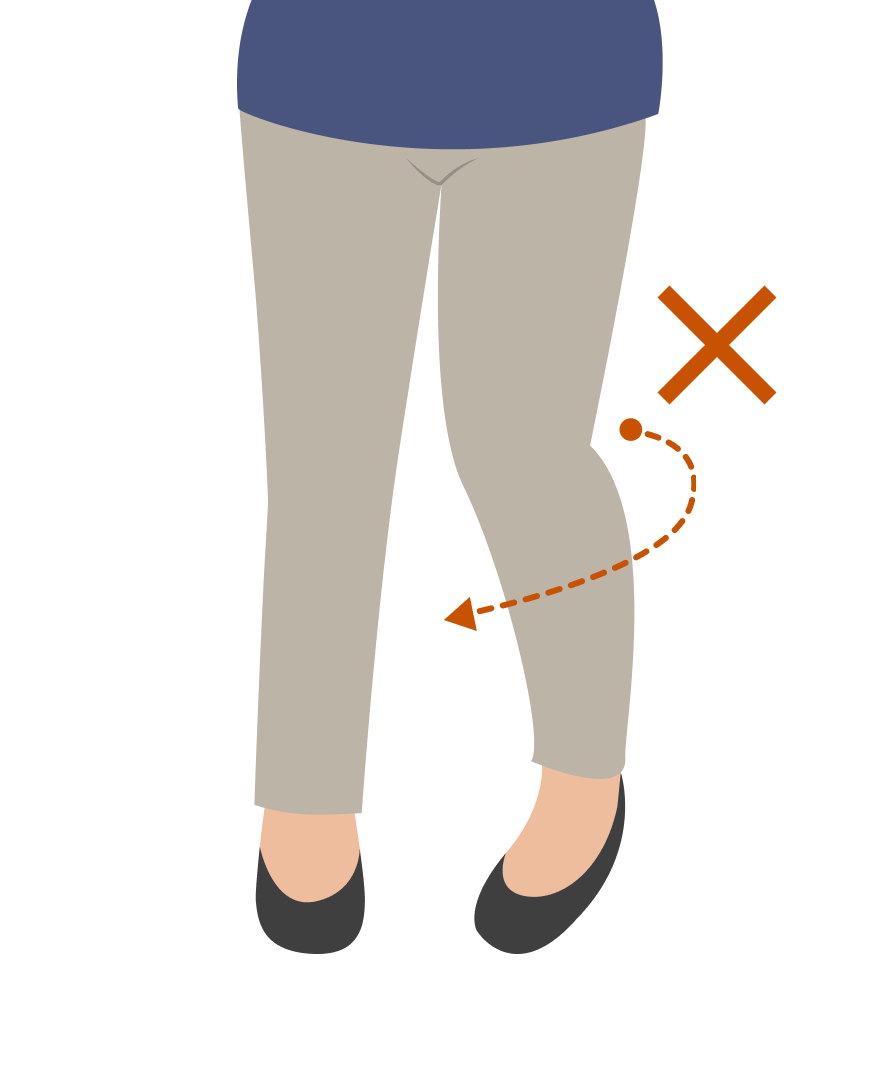
3
Do not turn the operated leg inward.
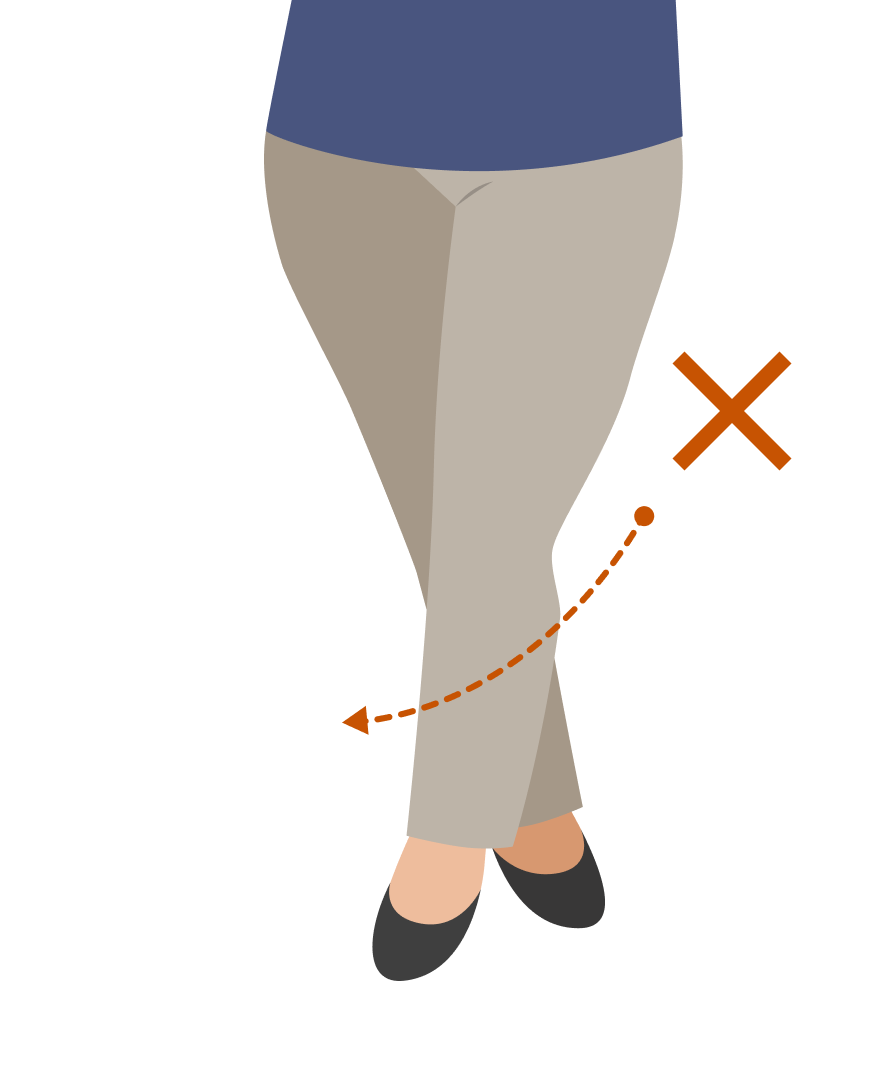
4
Do not cross your legs at any time: neither standing nor sitting.
See printing version
A PDF document will open in another window.
Daily Life Activities After a Hip Fracture
How to sit
To sit:
- Approach the chair with your healthy leg, leaving the operated leg a little forward.
- Sit down slowly, holding onto the armrests and without leaning forward.
Remember: Do not bend your hip more than 90°. Your knees must be lower or at the same height as your hip.
Tip: Use high, stable chairs with armrests. If needed, place risers to make them higher.
Sleeping and getting out of bed
In bed, sleep on your back with a pillow between your legs. When your doctor allows you, you will be able to sleep on your side on the healthy leg, with a pillow in between.
To get up:
- Move slowly towards the edge of the bed keeping the operated leg straight, without turning it inward.
- Turn your whole body and place the foot of the healthy leg on the ground first.
- Use the bed rails and use a walker or crutches to help you.
Tip: Raise the height of the bed with risers and fit rails to get up more easily.
Walking
To walk safely, use the walker or crutches and follow these steps:
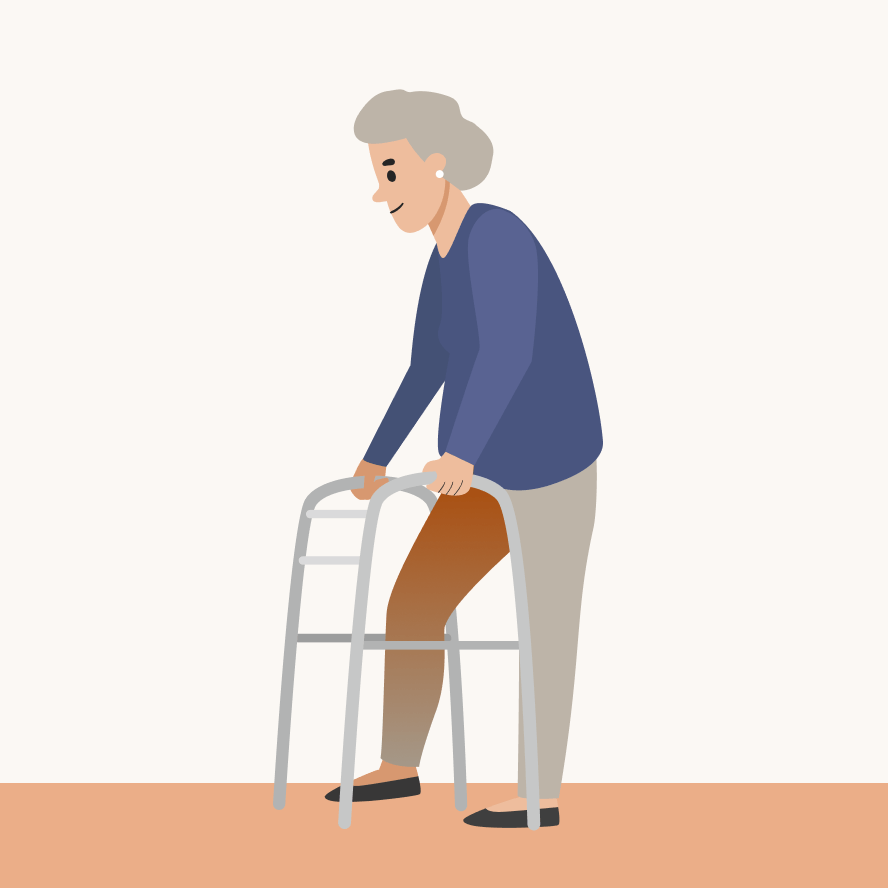
- Move the walker or crutches forward.
- Take one step with the operated leg. Do not place your foot beyond the walker or crutches.
- Move the healthy leg forward to reach the operated one.
Going up and down stairs
If you do not have a lift, you can go up and down stairs with the help of crutches or walking sticks.
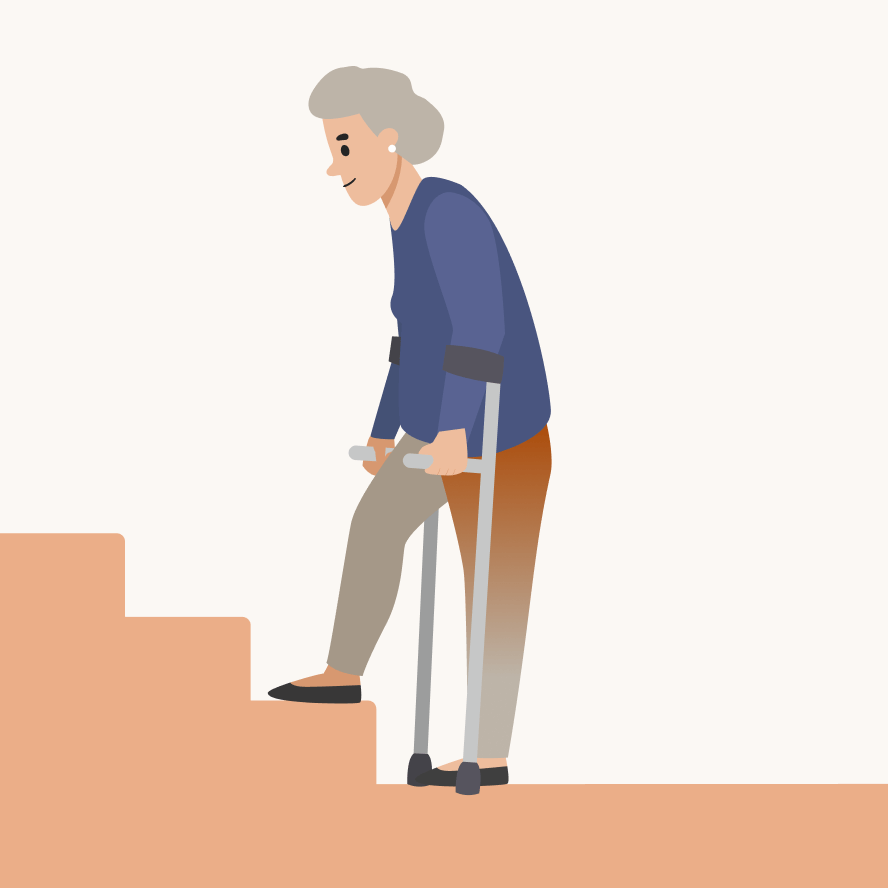
Going up stairs
- Place the healthy leg on the next step, leaving the operated leg and the crutches behind.
- Bring up the operated leg and the crutches to the same step, using your arms and uninjured leg to do the work.
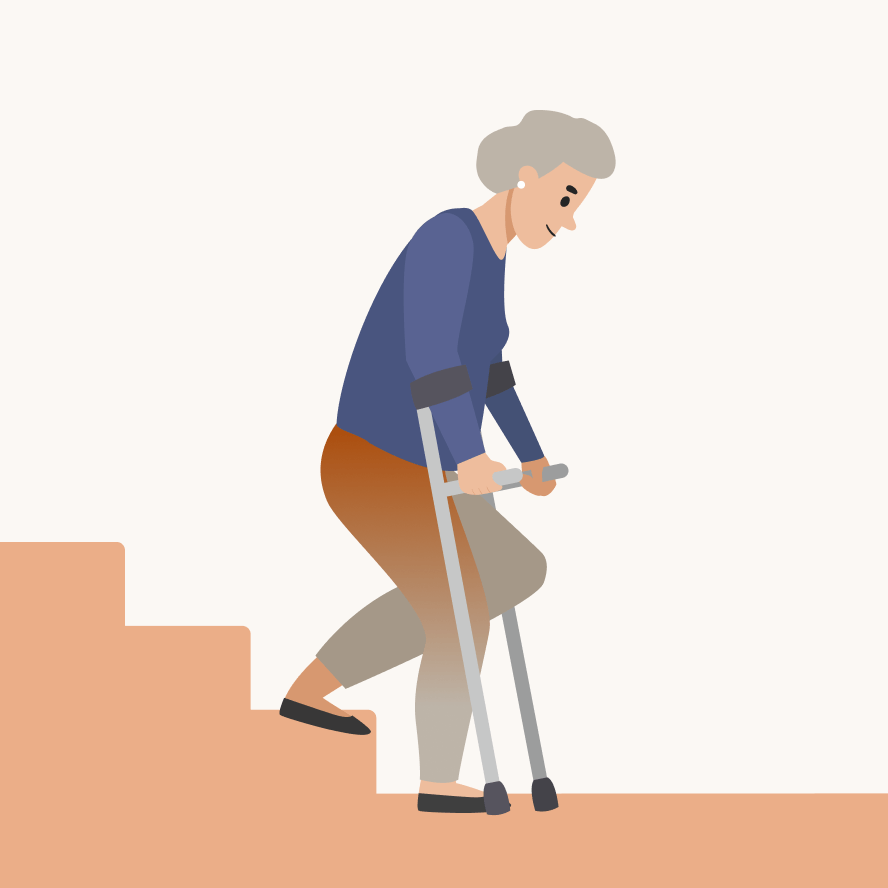
Going down stairs
- Place the operated leg and the crutches on the lower step, leaving the healthy leg behind.
- Bring the healthy leg down to the same step, using your arms and your healthy leg to do the work.
Remember: Go up with the healthy leg. Go down with the operated leg.
Going to the toilet
To go to the toilet:
- Approach the toilet with the healthy leg until you touch it. The operated leg stays slightly forward.
- Sit down slowly, holding onto the armrests and without leaning forward.
Remember: Do not bend your hip more than 90°. Your knees must be lower or at the same height as your hip.
Tip: Install a raised toilet seat and a side armrest. Make sure the riser does not move.
Showering
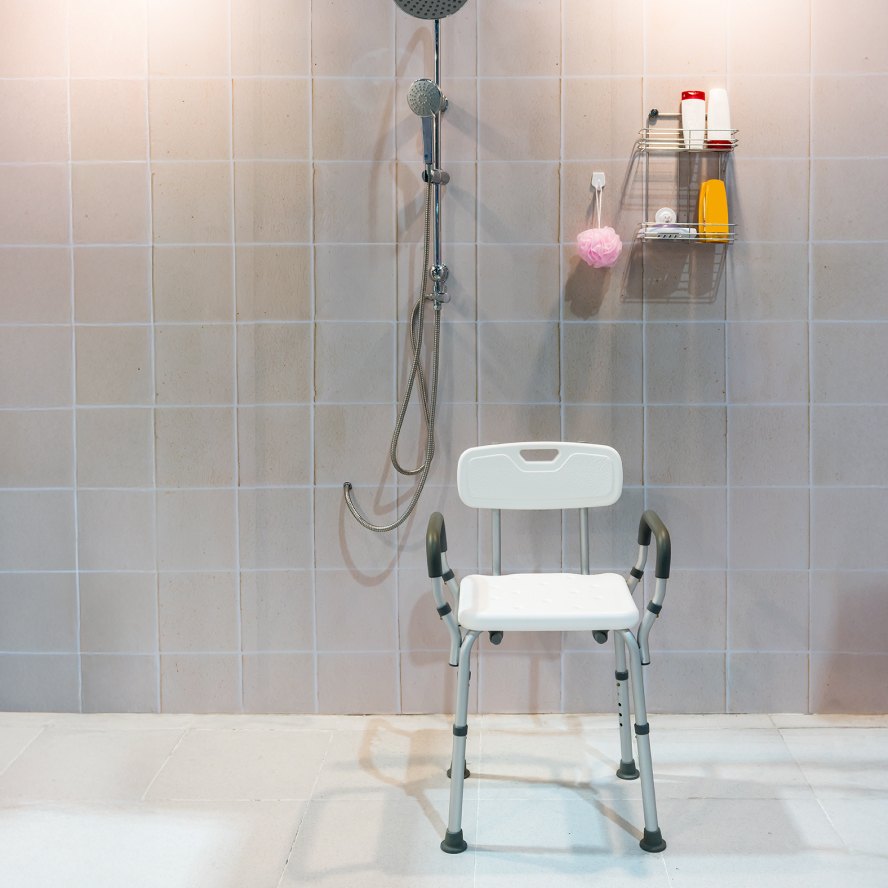
To shower safely:
- It is better to shower in a walk-in shower without a bathtub.
- Install a support bar to help you keep your balance when you go in and out.
- Shower sitting down, with a shower chair or stool.
- If you only have a bathtub, use adapted seats or benches to get in and out safely.
Socks, shoes and foot care
To put on your socks and shoes, use tongs, a sock aid and long shoehorns. This way, you will not have to bend down or strain your hip. Start with the foot of the operated leg and continue with the other.
Shoes: Wear closed, non-slip shoes with velcro that fit tightly.
Tip: There are tools that can help you wash your feet more easily (watch the video).
Adapt your space
At home:
- Move the objects you use often (clothes, utensils) so that they are within reach.
- Remove rugs, cables and things from the floor to avoid falls.
- Use long tongs to pick up what falls to the floor (watch the video for more information).
Our Team Explains the Process After a Hip Fracture
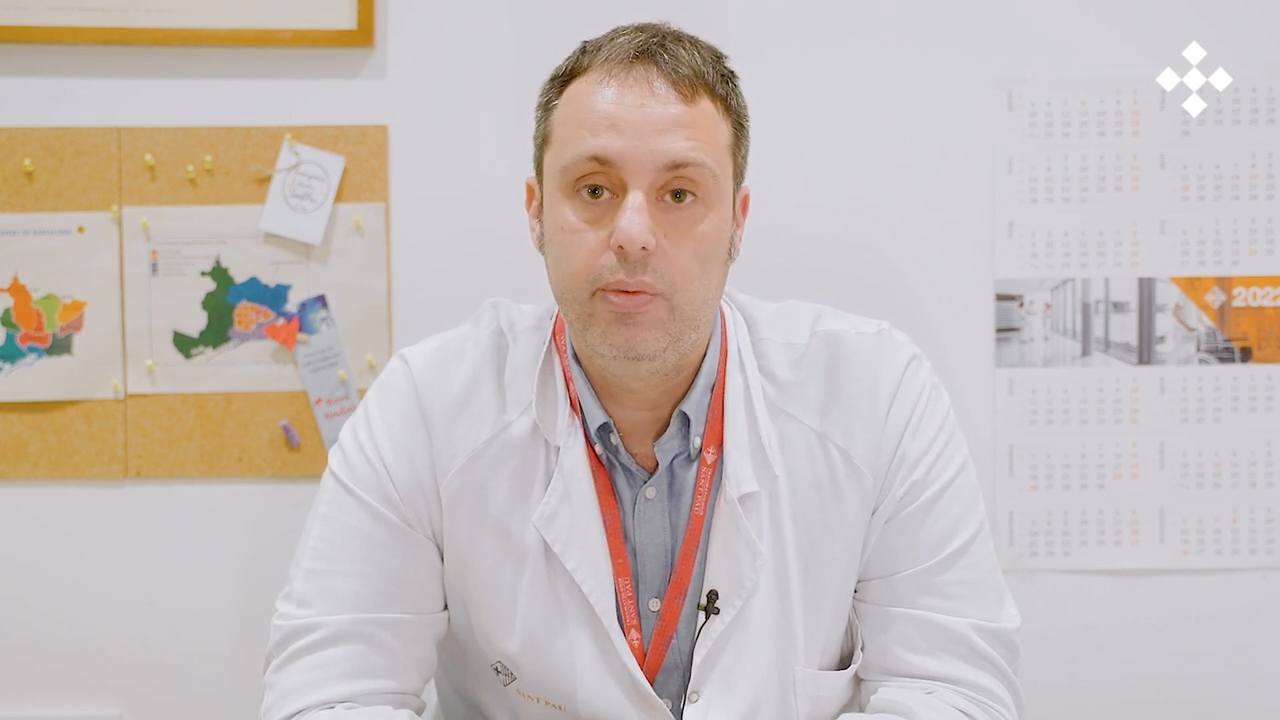
What happens after a hip fracture?
Dr. Jordi Martín, coordinator of the Fragility Fracture Management Unit, describes the entire process that of a patient who suffers a hip fracture follows.
How can the Nursing team help me?
Nurse Sandra Campos explains the patient’s process from arrival at the Emergency Department to later recovery, and the role of Nursing in this process.
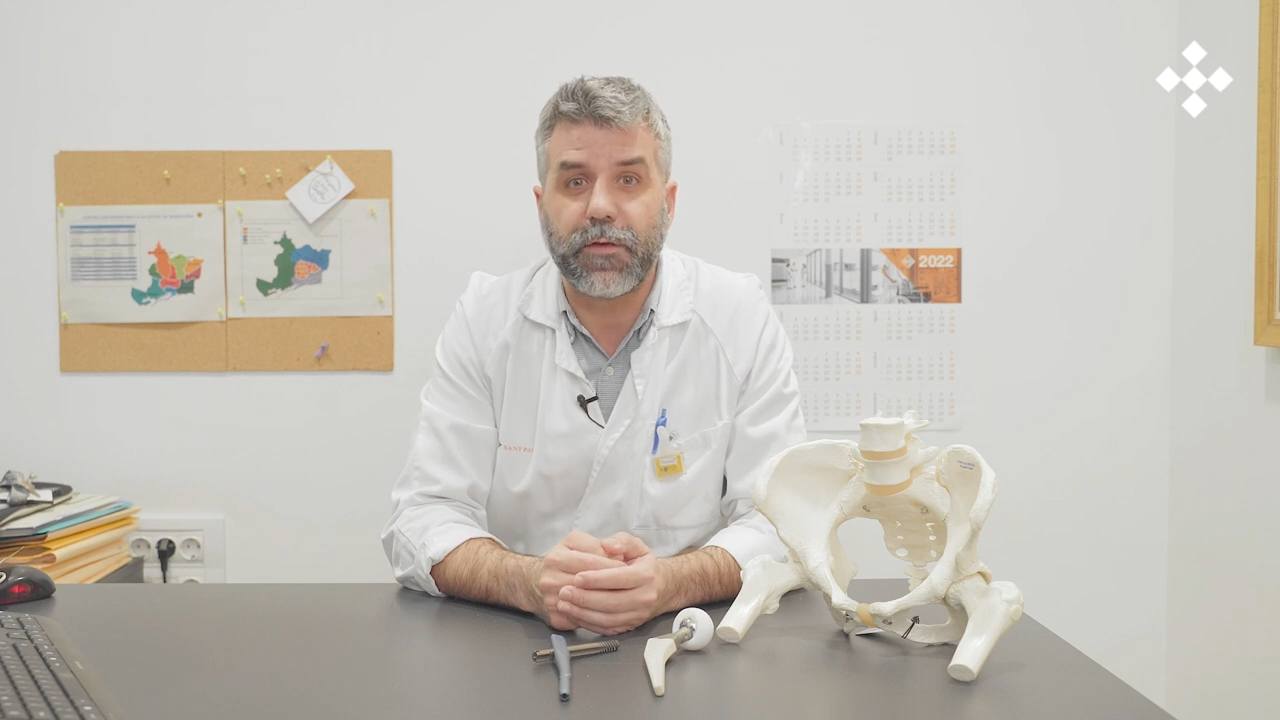
What surgery will I have?
Dr. Julio de Caso, clinical head of the Traumatology Service, explains the different surgical procedures that can be performed.

What medication will I take?
Jesús Ruiz, professional from the Pharmacy Service, answers frequently asked questions about medications.
How will Social Work help me?
Meritxell Liarte and Eva Ausina, social workers, explain the role of Social Work in the process and all the support they provide to patients.
How will I regain mobility?
Ana Cañete, Dolça Gras, and Yolanda Calle, from the Physical Medicine and Rehabilitation Service, explain how they will support you in regaining your mobility.


Comprehensive care to prevent fragility fractures
Our hospital has a special sensitivity towards older people. We are committed to offering complete care adapted to their needs. That is why we have a specific service, the DAFSU (Care Department for Fragility and the Urgency Syndrome), which helps us to better manage cases of fragility and urgency in geriatrics.
We also have a Fragility Fractures Unit made up of a team of professionals from different specialities such as geriatrics, traumatology, rehabilitation and nursing. Its goal is to prevent new fractures, improve bone health and offer personalised, high-quality care.
This unit works in coordination with other centres and professionals in the area and holds the Gold category within the international Capture the Fracture programme.
Collaborating Centres
This project is carried out together with several healthcare centres that work in a coordinated way to offer continuous and multidisciplinary care to patients with fragility fractures, ensuring continuity to those diagnosed with this condition.

Hospital de la Santa Creu i Sant Pau

Hospital Dos de Maig

Hospital Sociosanitari Mutuam Güell

Hospital Evangèlic de Barcelona

Hestia Health Palau


