
Tuberculosis (TB) remains one of the most prevalent infectious diseases worldwide, with high morbidity and mortality rates.
In Barcelona, after a 19% decrease in TB incidence during the pandemic year, 2021 saw a 6.7% increase in incidence, rising from 14.8 to 15.9 cases per 100,000 inhabitants. This increase occurred not only in the city of Barcelona but also globally, with an average worldwide rise of 4%. This global rise has been attributed to the decline in TB surveillance in 2020, when disease control measures were disrupted, and to the movement of people from high-burden countries.
Current evidence shows that up to 50% of patients with drug-sensitive TB (and up to 70% of those with multidrug-resistant TB) experience residual symptoms such as cough, shortness of breath, and fatigue, which are compatible with post-tuberculosis lung disease.
Therefore, it is necessary to continue active surveillance of the disease and establish prevention and control measures quickly and efficiently through the TB program and clinical units. Contact investigations must be improved, both in the community and within families and households—key interventions to help us meet the WHO’s 2035 targets.
Objectives
The Tuberculosis Functional Unit of the Hospital de la Santa Creu i Sant Pau has six main priorities for the prevention and control of this infection:
- Identify and treat people with active tuberculosis: Ensure rapid diagnosis and treatment to reduce transmission and improve health outcomes.
- Reduce the time to diagnosis of active TB: Shorten diagnostic delays for active tuberculosis, which currently average 60 days in Catalonia.
- Conduct contact investigations to detect latent TB infection (LTBI) or active TB, and provide appropriate treatment and follow-up at our center.
- Identify and treat people with LTBI at high risk of developing active TB due to immunosuppression: Detect and treat individuals with latent infection who are at high risk, prioritizing follow-up.
- Identify settings with a high risk of Mycobacterium tuberculosis transmission and implement effective infection control measures (e.g., among migrants, incarcerated populations, etc.).
- Prevent nosocomial TB: Ensure prevention of hospital-acquired TB among both patients and healthcare workers, in collaboration with the Occupational Health Service.
Unit members
- Coordinator: Virginia Pomar
- Supervisor: Carme Soria
- Secretary: Cristina Barón
- Gemma Ballarín. Infectious Diseases Unit
- Lorena Castillo. Ophthalmology Service
- Silvia Cermeño. Infectious Diseases Unit
- David de la Rosa. Pulmonology Service
- Laura Escolà. Infectious Diseases Unit
- Eva Gil. Emergency Service
- Montse Garrigó. Microbiology Service
- Ana Giménez. Radiology Service
- Fernando Gutiérrez. Pulmonology Service
- Laura López. Pathology Service
- Joaquín López-Contreras. Infectious Diseases Unit
- Gracia Mateo. Infectious Diseases Unit
- Esther Moga. Immunology Service
- Elisenda Moliner. Pediatrics Service
- Rebeca Desada Moras. Internal Medicine Service
- Lydia Navarro. Occupational Health Service
- Ferran Navarro. Microbiology Service
- Neus Pagès. Pharmacy Service
- Virginia Pajares. Pulmonology Service
- Anna Peregrino. Pulmonology Service
- Alexander Rombauts. Infectious Diseases Unit
- Antonella Simonetti. Infectious Diseases Unit
- Ingrid Solanes. Pulmonology Service
- Juan Carlos Trujillo. Thoracic Surgery Service
- Mónica Velasco Nuño. Nuclear Medicine Service
- Borja Zárate. Pharmacy Service
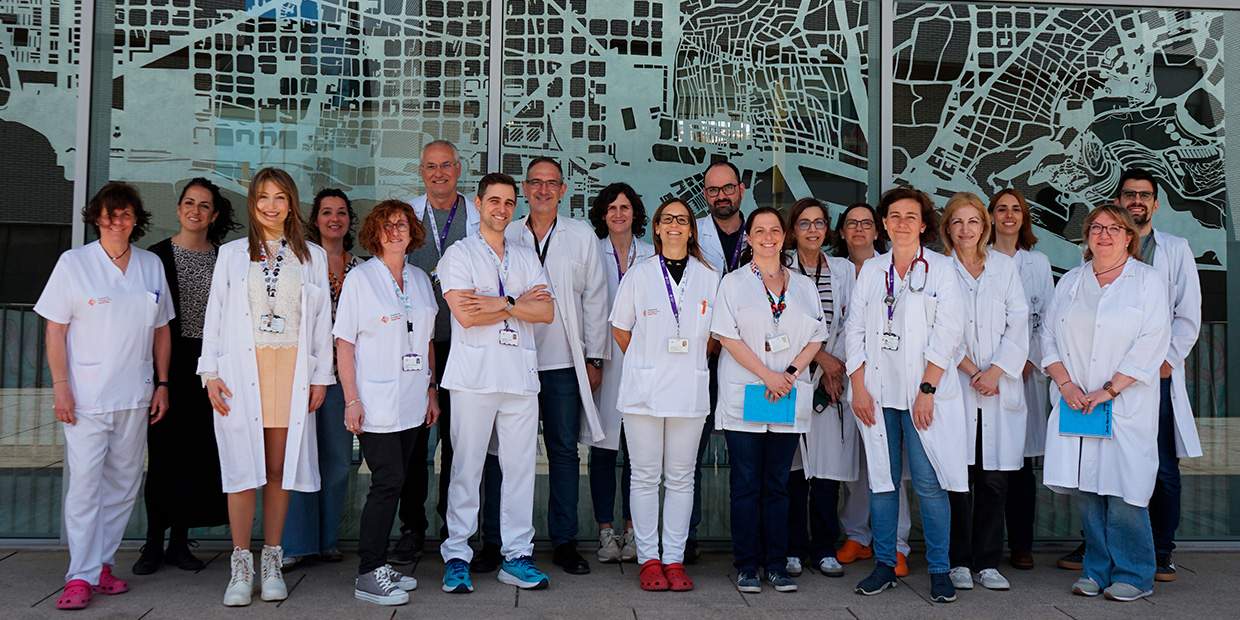
Other Collaborating Services of the Unit
- General Surgery
- Otolaryngology
- Nephro-Urology Department (F. Puigvert)
- Oncology
- Hematology
- Cardiac Transplant Unit
- Rheumatology
- Neurology
- Dermatology
- Gastroenterology
- Hematology
- Biochemistry
Multidisciplinary meetings and Commitees
Patients are generally seen on an outpatient basis by the Infectious Diseases, Pulmonology, or Pediatrics departments. Initially, they are attended in outpatient consultations, but we also have two isolation rooms at the Day Hospital for Infectious Diseases and Pulmonology, both located on Floor 0.
The members of the Tuberculosis Functional Unit meet monthly, on the second Tuesday of each month from 11 a.m. to 12 p.m., at the Infectious Diseases Day Hospital. These meetings include participation from nursing teams of the Infectious Diseases and Pulmonology areas, as well as other specialists as needed for each clinical case. Extraordinary meetings may also be convened in response to urgent or complex cases.
Additionally, the entire Unit holds quarterly meetings.
Quarterly meetings will continue for the Tuberculosis Operational Committee Group of the AIS Dreta (including all providers of the AIS and the Public Health Agency of Barcelona), which have been held at our center since 2008. Some Unit members are part of this group, coordinated by the Infectious Diseases department.
We also continue the meetings of the working group on prevention of community-acquired infections in immunocompromised patients with autoimmune diseases. This group was formed in 2017 and includes 11 departments in the hospital.
Procedures
Patients with active tuberculosis are mainly referred from the Infectious Diseases/Internal Medicine, Pulmonology, Pediatrics, and Emergency departments.
Patients referred from other sources should be directed to the Infectious Diseases or Pulmonology Day Hospital. They should only be sent to the Emergency Department in cases of frank hemoptysis, on weekends, or public holiday eves.
TB contacts are referred by the Infectious Diseases and Pulmonology departments or by the Public Health Agency, and will be scheduled directly in the appropriate agenda of the Infectious Diseases Day Hospital.
Patients with latent tuberculosis in the context of autoimmune disease, pre-heart or kidney transplant, primary immunodeficiencies, or hematologic/oncologic conditions will be scheduled for outpatient consultations.
In case of doubt, contact: infeccioses@santpau.cat
Research and Training
The Unit’s members have collaborated on publications related to TB and actively participate in national and international studies and clinical trials. They have also contributed to drafting a clinical practice guideline for managing drug-resistant TB.
In terms of ongoing training, they attend the annual International Tuberculosis Conference organized by the Public Health Agency of Barcelona, as well as other specialized scientific meetings, and they organize an annual course on updated TB diagnosis and treatment.


