
El diagnòstic i tractament dels pacients diagnosticats de càncer de recte localment avançat és complex i és imprescindible un abordatge multidisciplinari.
Amb aquesta unitat funcional es pretén valorar de manera global el pacient oncològic en ser atès per professionals de diferents especialitats en un mateix temps i espai de treball, conformant d'aquesta manera una visió integral de la patologia i permetent una presa de decisions compartida.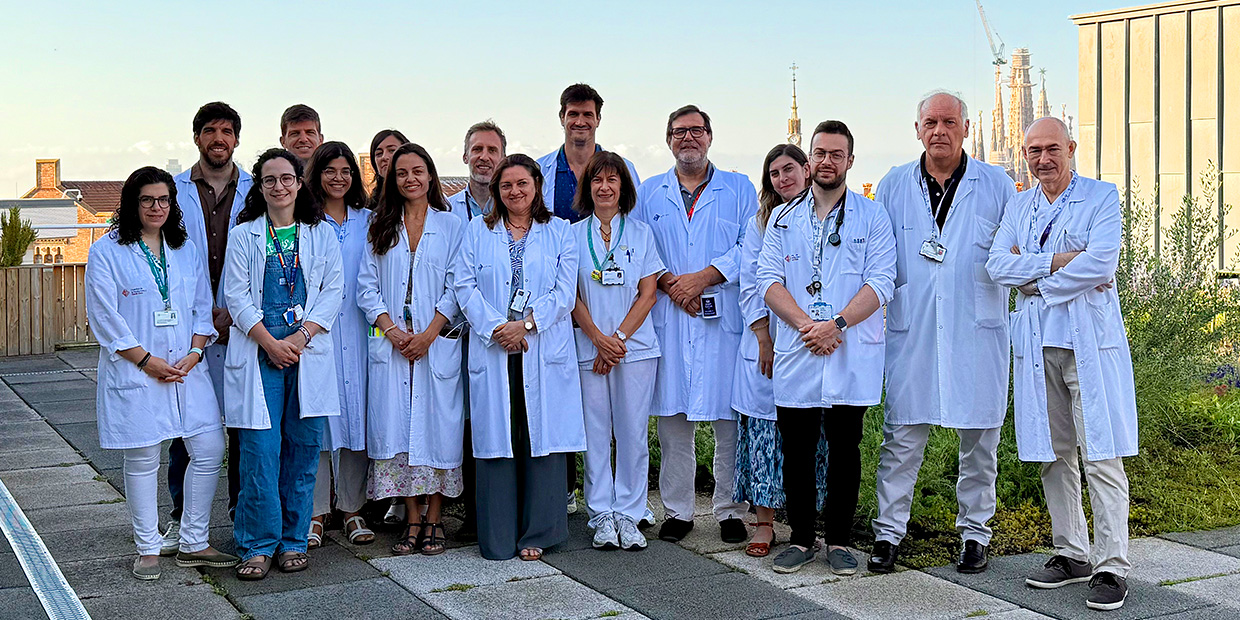
Objectius
1. Proporcionar una atenció multidisciplinària, multiprofessional i multimodal de màxima qualitat als pacients afectats de Càncer de Recte
- Unificant l'atenció.
- Optimitzant els circuits.
- Determinant la millor estratègia terapèutica per a cada pacient.
2. Ser una unitat de referència per al pacient, oferint-li una visió global de la seva malaltia i tenint en compte les seves preferències.
3. En el cas de pacients amb recent diagnòstic de neoplàsia rectal que requereixen un tractament multimodal, que els diferents professionals de les especialitats implicades -Cirurgia General, Oncologia Mèdica, Oncologia Radioteràpica i Infermeria- puguin visitar-los al mateix temps, si escau, per decidir de manera conjunta el millor tractament en cada cas i reduir visites a l'Hospital.
4. Detectar els pacients candidats a valoració integral per la Unitat d'Oncogeriatria i a derivació a programes de prehabilitació.
5. Detectar els pacients amb desnutrició o risc de desnutrició i realitzar la derivació precoç a Nutrició i Dietètica.
6. Valoració de resposta i control de toxicitats després de finalitzar el tractament neoadjuvant.
7. Abordatge coordinat de complicacions del tumor durant la neoadjuvància (p.ex: sagnat, oclusió intestinal, abscessificació) que puguin implicar un canvi en l'estratègia terapèutica.
8. Valoració multidisciplinària de l'evolució del pacient després del tractament neoadjuvant per a planificar l'estratègia quirúrgica.
9. Avaluació conjunta del pacient després del tractament quirúrgic per determinar el millor moment de reiniciar el tractament sistèmic i, si el precisa, planificar el moment òptim per a la reconstrucció del trànsit intestinal.
10. En casos d'estratègia de preservació d'òrgan (Watch & Wait), fer el seguiment conjunt dels pacients.
11. Valorar de forma continuada la qualitat de vida dels pacients per a poder adaptar-nos a les seves necessitats i avançar-nos en el diagnòstic de les complicacions derivades de la malaltia oncològica.
12. Detecció precoç i tractament inicial de la simptomatologia del LARS.
13. Identificar els pacients que requereixin derivació a la Unitat Funcional de Sòl Pelvià.
14. Promoure la docència entre professionals de l'àmbit del tractament multimodal del càncer de recte.
15. Ser promotors d'estudis científics multidisciplinaris i assajos clínics del Càncer de Recte.
16. Impulsar la introducció en la recerca en el camp del càncer de recte als professionals en formació.
17. Realitzar un registre dels pacients de la Unitat Funcional i l'activitat realitzada en aquesta, que ens permeti explotar les dades i avaluar els resultats.
18. Afavorir la comunicació interna entre professionals per a millorar els circuits.
19. Reunió anual multidisciplinària d'actualització de novetats en el diagnòstic i tractament del càncer de recte.
Equip i Serveis que en formen part
Oncologia Mèdica
● David Páez López-Bravo
● Anna C. Virgili Manrique (coordinadora UFCR)
● Berta Martín Cullell
● Maria Nieva Muñoz
Oncologia Radioteràpica
● Josep Balart Serra
● Joan Carles Julià Sanahuja
Cirurgia General i Digestiva
● M. Carmen Martínez Sánchez
● Beatriz Espina Pérez (coordinadora UFCR)
● Anna Sánchez López
● Oriol Pino Pérez
● Pol Guarner Piquet
Endoscòpia Digestiva
● Patrícia Pedregar Pascual
● Jordi Gordillo Ábalos
Radiodiagnòstic
● Juan Carlos Pernas Canadell
● Javier Oliva Ibarz
● Miguel Ángel Ríos Vives
Medicina Nuclear
● Mònica Velasco Nuño
Anatomia Patològica
● Justyna Szafranska
● Victoria Fusté Chimisana
● Caterina Fumagalli
Oncogeriatria
● Olga Torres
● Álvaro Santos
Infermeria Gestora de Casos
● Lucía Ramírez López
Infermera Colorrectal / Estomatoterapeuta
● Mercedes Rubio Vázquez
Sessions i comitès multidisciplinaris
El comitè de càncer colorectal es reuneix cada dimarts del 8 en 10. Es presenten tots els diagnòstics de càncer colorectal.
En la Unitat Funcional de Càncer de Recte es visitaran conjuntament els pacients diagnosticats de càncer de recte els dimarts de 10 a 12h.


